Why Do I Fart So Much? Flatulence Explained
Author: Azuka Chinweokwu Ezeike, MBBS, FWACS, FMCOG, MSc (PH)
Highlights
- Flatulence is a normal part of digestion, but excessive gas may sometimes indicate an underlying medical condition
- Most intestinal gas is produced when gut bacteria ferment undigested carbohydrates, particularly high-FODMAP foods
- Eating habits such as swallowing air, chewing gum, and drinking carbonated beverages can increase gas production
- Dietary changes, lifestyle modifications, and treating underlying digestive disorders can reduce excessive flatulence
- Flatulence accompanied by weight loss, severe abdominal pain, persistent diarrhoea, or rectal bleeding requires prompt medical evaluation
Introduction
Imagine being in line at the airport check-in counter and suddenly farting, not just once but several times. The smell is so strong that people begin to move away from you, the line is disrupted, and the situation even draws the attention of airport officials. This is not the first time it has happened. Similar episodes have occurred several times in public, and you are now beginning to feel anxious about going out in public.
Is this something you should be concerned about?
Excessive passage of gas is an embarrassing symptom that many people find difficult to discuss with others or even with their doctors. When there is excessive accumulation of gas in the intestines, it is known as meteorism [1]. When this accumulated gas is released from the colon through the anus, it is known as flatulence [2].
Although this condition is not usually associated with serious illnesses in most cases, the social embarrassment it causes can affect quality of life and may have psychological consequences.If you have found yourself struggling with this symptom, do not worry.
This article will help you understand the causes of excessive farting and what you need to do.
What Is Flatulence?
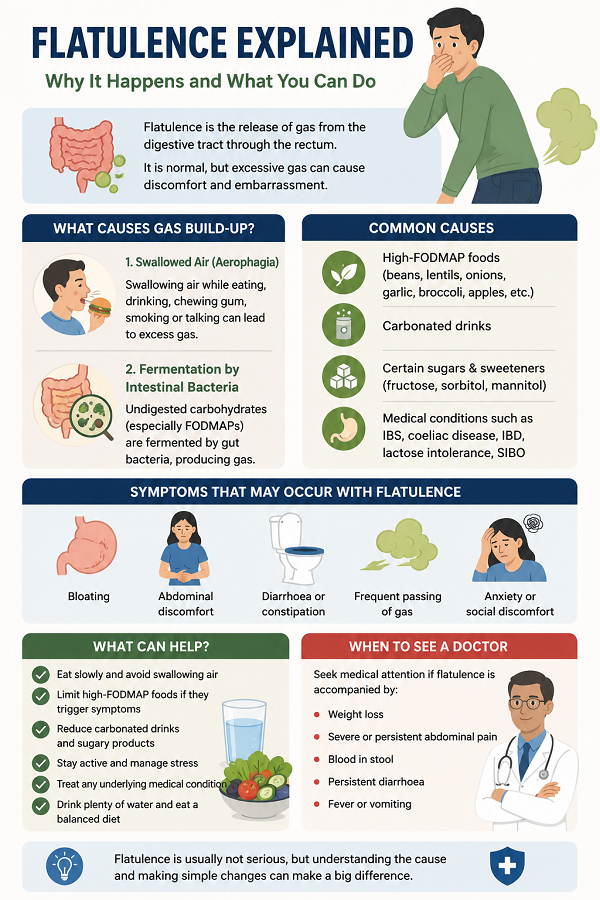
Flatulence is the release of gas from the digestive tract through the rectum. This gas is a mixture of several gases, including:
- Nitrogen
- Oxygen
- Carbon dioxide
- Hydrogen
- Methane
Interestingly, most intestinal gas does not have an unpleasant smell. The characteristic odour is usually caused by small amounts of sulfur-containing gases produced when gut bacteria break down certain foods.
What Causes Gas Build-Up in the Intestines?
Gas usually builds up in the intestines due to two main factors:
1. Swallowed Air (Aerophagia)
This is known as aerophagia. Air can be swallowed during activities such as:
- Eating, especially when eating quickly
- Chewing gum
- Drinking
- Smoking
The swallowed air can accumulate in the digestive tract and later be released as gas.
2. Fermentation by Intestinal Bacteria
Some sugars, starches, and fibres are not completely digested in the small intestine. The undigested portions move into the large intestine, where billions of healthy bacteria ferment them.
This fermentation process naturally produces gases as a by-product. For example, certain carbohydrates known as fermentable oligosaccharides, disaccharides, monosaccharides, and polyols (collectively called FODMAPs) are poorly absorbed in the small intestine. They are rapidly fermented by intestinal bacteria, which can lead to increased gas production and abdominal discomfort.
How Much Gas Is Considered Normal?
Although there is no definite cutoff, research suggests that passing gas through the anus up to about 25 times a day may still fall within the normal range for some individuals [3].
However, what is considered normal varies from person to person. It is important to understand your usual pattern of passing gas so that you can recognise when there is a significant change.
Common Causes of Flatulence
Flatulence is usually related to dietary factors, but it can sometimes occur due to underlying medical conditions.
Functional Causes
In some cases, the cause of excessive gas is due to how your brain and gut interact. This is often referred to as a functional gastrointestinal disorder
Dietary Causes of Flatulence
Flatulence often occurs when the body breaks down certain foods.These include:
Gas-Producing Foods
Fibre is essential for good digestive health. It helps prevent constipation, supports healthy gut bacteria, and may reduce the risk of several chronic diseases.
However, high FODMAP foods can also increase gas production because bacteria in the colon ferment the fibre during digestion.Common gas-producing foods include:
- Beans
- Lentils
- Chickpeas
- Broccoli
- Cabbage
- Garlic
- Onions
- Brussels sprouts
- Cauliflower
- Apples
- Pears
- Whole grains
Sugars and Sweeteners
Certain sugars and artificial sweeteners can contribute to excessive gas production. Examples include:
- Fructose, which is found in fruits and honey
- Sorbitol and mannitol, which are found in some sugar-free gums and other products
Carbonated Drinks
Carbonated drinks, such as soda and other fizzy beverages, can introduce additional gas into the digestive system, contributing to bloating and flatulence.
Medical Conditions Associated with Flatulence
Irritable Bowel Syndrome (IBS)
Irritable bowel syndrome is a condition associated with abnormal intestinal movement and function [3,4].
The exact cause is not fully understood, but it is believed to involve problems with intestinal muscles, nerves, gut infections, or stress.People with IBS may experience symptoms such as: [5]
- Bloating
- Diarrhoea
- Increased mucus in the stool
- Excessive passage of gas
- Abdominal discomfort
Coeliac Disease
Coeliac disease is an autoimmune condition in which the immune system reacts abnormally to gluten, a protein found in foods containing:
- Wheat
- Rye
- Barley
Eating gluten-containing foods can trigger gastrointestinal symptoms such as:
- Bloating and flatulence
- Diarrhoea
- Abdominal pain
- Indigestion
Inflammatory Bowel Disease (IBD)
Inflammatory bowel disease refers to a group of diseases that cause inflammation in the digestive tract. The most common are Crohn’s disease and ulcerative colitis. They increase gas production by affecting the normal digestive function of the gastrointestinal tract.They are usually associated with additional symptoms, including:
- Diarrhoea
- Bleeding from the anus
- Weight loss
Small Intestinal Bacterial Overgrowth (SIBO)
The small intestine normally contains a small number of bacteria. However, in some situations, there can be an abnormal increase in the number of bacteria in this part of the digestive tract. This condition is known as small intestinal bacterial overgrowth (SIBO).
SIBO can lead to increased intestinal gas production.
The bacteria commonly involved include:
- Streptococcus species
- Escherichia coli
- Lactobacillus species
- Bacteroides species
Symptoms may include:
- Excessive passage of gas
- Bloating
- Abdominal distension
- Abdominal pain
- Diarrhoea
Lactose Intolerance
Lactose intolerance occurs when the body produces insufficient amounts of lactase, an enzyme produced by intestinal cells that breaks down lactose into the simpler sugars glucose and galactose.
When lactose is not properly digested, it accumulates in the intestine and can lead to increased gas production.
Symptoms may include:
- Nausea
- Abdominal pain
- Passage of gas
- Bloating
Other Causes of Flatulence
Other conditions and factors that may contribute to excessive gas include:[3]
- Small intestinal or large intestinal obstruction
- Constipation
- Certain medications, including some pain medicines such as ibuprofen and opioids, antidepressants, and orlistat
- Gastroesophageal reflux disease (GERD)
- Gastroparesis
How is Flatulence Diagnosed?
Your doctor can diagnose the cause of excessive gas through a detailed conversation and physical examination rather than extensive testing.
Medical History
Dietary History
Your doctor will likely ask about your eating habits, including:
- How quickly you eat
- Whether you chew gum frequently
- The specific foods you consume
The doctor will also ask about associated symptoms such as:
- Bloating
- Abdominal pain
- Weight loss
- Changes in bowel habits
Physical Examination
Your doctor will perform a careful examination of the abdomen and other relevant parts of the body.
A rectal examination and, where appropriate, a pelvic examination may also be important to assess the structure of the pelvic organs and identify possible causes of symptoms.
Targeted Testing
If an underlying medical condition is suspected, your doctor may request specific tests, including: [2]
- Blood tests, including testing for Helicobacter pylori infection
- Coeliac serology, which is a blood test used to check for celiac disease
- Breath tests to assess for lactose intolerance or small intestinal bacterial overgrowth (SIBO)
- Stool tests
- Barium studies, to check for obstruction in the intestines.
- Abdominal ultrasound
- Abdominal X-ray
- Computed Tomography (CT) scan
How is Flatulence Treated?
Managing flatulence often involves lifestyle adjustments and self-management. However, when excessive gas is caused by an underlying medical condition, your doctor may include additional medical treatment [2.3].
The management of flatulence and associated bloating mainly involves: changes to diet, eating habits, and lifestyle.
Flatulence may also be associated with anxiety and other mental health conditions. Your doctor will assess and manage the underlying psychological factors alongside the gastrointestinal symptoms [4].
Changing How You Eat
Eat Smaller, More Frequent Meals
Instead of eating three large meals, try eating four to seven smaller portions throughout the day. This may reduce the amount of gas produced during digestion.
Eat Slowly and Chew Thoroughly
Eating too quickly can cause you to swallow more air. Chewing food properly and eating slowly can help reduce swallowed air and improve digestion.
Time Your Drinks
Avoid drinking large amounts of fluid during or immediately after meals. Waiting for some time after eating before consuming drinks, fruits, or vegetables may help some individuals.
Avoid Habits That Increase Swallowed Air
To reduce excess air entering the digestive tract:
- Avoid chewing gum
- Avoid using straws
- Avoid sucking on hard sweets
Dietary Adjustments
Keep a Food Diary
Keeping a record of what you eat and when symptoms occur can help identify specific trigger foods [1]. Once identified, these foods can be reduced or avoided.
Limit Gas-Producing Foods
Some healthy foods can increase gas production because they are fermented by bacteria in the colon. Examples include:
- Beans
- Lentils
- Cabbage
- Brussels sprouts
- Garlic
- Onions
- Prunes
Consider a Low-FODMAP Diet
A low-FODMAP diet involves reducing foods that contain certain fermentable carbohydrates that may contribute to gas and bloating.Examples of low-FODMAP foods include:
- Lactose-free dairy products
- Meat
- Eggs
- Oats
- Soy products
- Rice
However, a low-FODMAP diet can be restrictive and is best undertaken under the guidance of a healthcare professional, especially if followed for an extended period.
Be Careful With Dairy and Wheat
Some people experience increased bloating and gas after consuming dairy products or wheat-containing foods. Identifying personal triggers can help guide dietary choices.
Avoid Artificial Sweeteners and Carbonated Drinks
Artificial sweeteners such as sorbitol and carbonated drinks can increase gas production because they may be poorly digested.
Reduce Fatty Foods
Fat slows stomach emptying and may prolong the feeling of fullness and bloating.
Consider Helpful Herbs
Some herbs and beverages, such as ginger, peppermint tea, cumin, dill, parsley, and basil, may help reduce symptoms in some individuals.
Lifestyle and Wellness Measures
Stay Physically Active
Regular exercise can help improve bowel movement and allow gas to pass through the digestive system more efficiently.
Manage Stress
Stress and anxiety can affect digestion, alter bowel movements, and increase swallowing of air. Relaxation techniques such as deep breathing exercises and yoga.
Treatment of Underlying Medical Conditions
If lifestyle and dietary changes do not improve symptoms, or if symptoms persist, healthcare providers may investigate underlying conditions such as irritable bowel syndrome (IBS), bowel obstruction, or other gastrointestinal disorders.
Treatment may involve specific approaches, such as: [3]
- A low-FODMAP diet,
- Medications like probiotics or antibiotics
- Surgical treatment
When Should You See a Doctor?
You should seek medical advice if you experience: [2]
- Worsening symptoms
- Unintentional weight loss
- Severe abdominal pain
- Persistent diarrhoea
- Vomiting
- Bleeding from the anus
- A mass or swelling in the abdomen
Conclusion
If you have been wondering, "Why do I fart so much?", the answer is often simpler than expected. Frequent flatulence is usually a normal part of digestion, especially in people who consume fibre-rich foods.
Although excessive flatulence can be embarrassing, it is rarely a cause for concern on its own. Paying attention to eating habits, identifying trigger foods, and maintaining good digestive health can often make a significant difference.
However, if excessive gas is associated with other unusual symptoms, it is important to seek medical advice.
Frequently Asked Questions
Why Does My Fart Smell So Bad?
The unpleasant smell of gas is usually caused by small amounts of hydrogen sulfide and other sulfur-containing gases produced when gut bacteria break down certain foods. A strong odour may also occur in conditions such as lactose intolerance or inflammatory bowel disease.
Can Flatulence Be Due to Cancer?
Excessive flatulence is rarely caused by cancer. However, in some cases, increased gas may occur alongside digestive tract cancers or ovarian cancer, particularly when associated with other warning symptoms.
Can Stress Cause Too Much Gas?
Yes. Stress and anxiety can affect digestion by altering bowel movements and increasing the amount of air swallowed. This may contribute to increased gas production and bloating.
References
- Zhang L, Sizar O, Higginbotham K. Meteorism. In: StatPearls [Internet]. Treasure Island (FL): StatPearls Publishing; 2026 [cited 2026 Jul 17]. Available from: http://www.ncbi.nlm.nih.gov/books/NBK430851/ PubMed PMID: 28613601
- Wilkinson, JM., Cozine EW, Loftus CG. Gas, Bloating, and Belching: Approach to Evaluation and Management.American Family Physician, vol. 99, no. 5, Mar. 2019, pp. 301–09. Available from: https://www.aafp.org/afp/2019/0301/p301
- Hasler, W.L. Gas and Bloating. Gastroenterology & Hepatology, vol. 2, no. 9, Sept. 2006, pp. 654–62. PubMed Central, Available from: https://www.ncbi.nlm.nih.gov/pmc/articles/PMC5350578/
- Niriella, M. A., Jayasundara, H. D., Samarawickrama, V. T., Prabagar, K., & De Silva, H. J. (2025). Belching, bloating, and flatulence: pitfalls and challenges in evaluating and managing symptoms of intestinal gas and how to avoid them. Expert Review of Gastroenterology & Hepatology, 19(7), 805–815 , Available from: https://doi.org/10.1080/17474124.2025.2514239.
- Van Gils T, Katsumata R, Hreinsson JP, Drossman DA, Tack J, Törnblom H, et al. Bloating, Visible Abdominal Distension, and Other Intestinal Gas‐Related Symptoms in Irritable Bowel Syndrome and Functional Dyspepsia. UEG Journal. 2026 Feb;14(1):e70186. doi:10.1002/ueg2.70186 Available from:https://doi.org/10.1002/ueg2.70186
Disclaimer:
The information provided on this website is for general educational and informational purposes only. It is not intended to replace professional medical advice, diagnosis, or treatment. Always seek the advice of your physician or other qualified health provider with any questions you may have regarding a medical condition.
Published July 30, 2026