Do Hair Dyes Cause Cancer?
Medical Writer: Rachel Njuguna Dip (Medical Laboratory Science)
Medical Reviewer: Azuka Chinweokwu Ezeike, MBBS, FWACS, FMCOG, MSc (PH)
Highlights
- Hair dyes are widely used cosmetic products for changing or enhancing hair colour.
- Early hair dye formulations contained chemicals that raised concerns about potential cancer risk.
- Many potentially harmful ingredients have been removed from hair dyes following safety concerns.
- Scientific studies on the association between hair dye and cancer risk have produced mixed and inconclusive results.
- Occupational exposure among hairdressers may involve higher contact with hair dye chemicals.
- Following recommended precautions can help reduce potential exposure to hair dye ingredients.
Introduction
Hair colouring has become one of the most common cosmetic practices worldwide. Millions of people use hair dye to change their appearance, such as covering grey hair or following fashion trends. Hair dyes are used professionally in salons or at home and come in various forms, from temporary colour rinses to permanent colour dyes.
Despite their widespread use, concerns about their safety have persisted for decades. These concerns began in the late 1970s, when certain chemicals used in early hair dye formulations were found to cause cancer in laboratory animals. As a result, many of these substances were removed or replaced in modern hair dye products to improve safety [1].
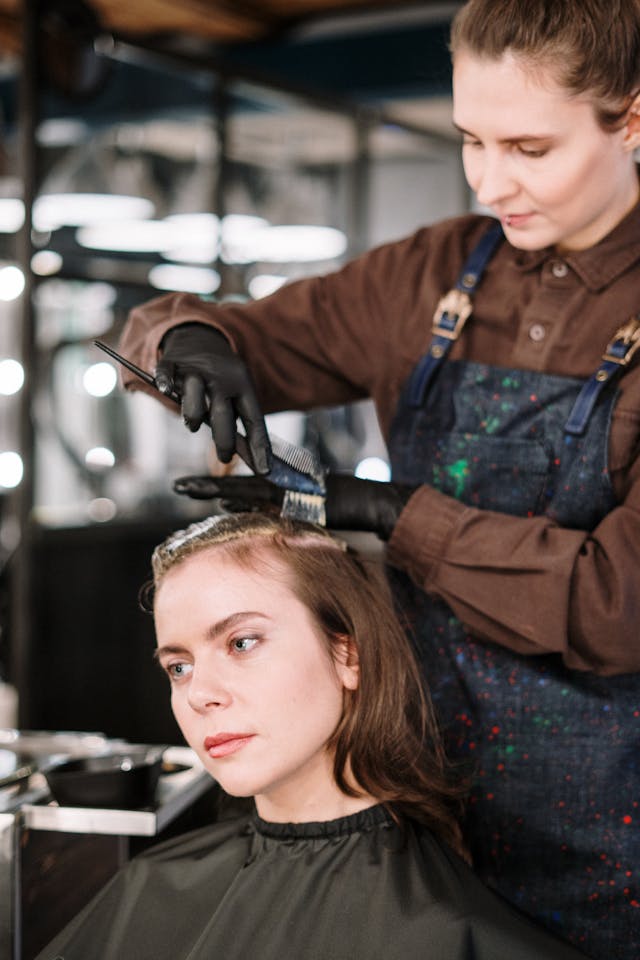
Today, researchers continue to investigate whether hair dye use is associated with an increased risk of cancer. Importantly, a distinction is made between personal cosmetic use and occupational exposure. Hairdressers and barbers who work with these products daily for many years may face a different level of risk compared with individuals who colour their hair occasionally.
The International Agency for Research on Cancer (IARC) has classified occupational exposure as a hairdresser or barber as probably carcinogenic to humans.
Understanding how hair dyes work and what the scientific research says about their safety can help you make informed decisions about using these products.
Understanding Hair Dyes
Hair dyes are cosmetic products designed to change the colour of your hair. They work by adding pigments to the hair shaft or by chemically altering the natural pigment in your hair. Different types of hair dyes exist, varying in how long the colour lasts and how deeply the dye penetrates the hair structure. These products have been widely studied in toxicology and dermatology research to understand their composition and potential health risks [1].
Hair dyes are generally grouped into three main categories:
- Temporary hair dyes
- Semi-permanent hair dyes
- Permanent hair dyes
Of these, permanent hair dyes have been the most extensively studied in relation to cancer risk, owing to their chemical composition and the depth to which they penetrate the hair structure. Understanding the differences between these types can help you choose the option that best suits your needs.
Temporary Hair Dyes
Temporary hair dyes coat the outer surface of the hair shaft and do not penetrate deeply into the hair structure. Because they remain on the surface, the colour usually washes out after one or two shampoos.You may choose temporary dyes if you want to:
- Experiment with a new colour
- Add highlights, temporarily
- Colour your hair for a short period or for a special occasion
These dyes generally contain fewer reactive chemical ingredients because they do not rely on strong chemical reactions to change the hair’s natural pigment [1]. As a result, temporary hair dyes are associated with the lowest level of chemical exposure of the three categories of hair dye.
Semi-Permanent Hair Dyes
Semi-permanent hair dyes penetrate slightly into the outer layers of the hair shaft but do not permanently change the natural pigment. The colour gradually fades after several washes.You might use semi-permanent dyes to:
- Enhance your natural hair colour
- Add tone or depth to your hair
- Refresh previously coloured hair
Compared to permanent dyes, these products usually contain lower concentrations of chemical ingredients and do not involve the same level of oxidative reactions during application [1]. In terms of chemical exposure, semi-permanent dyes fall between temporary and permanent hair dyes, making them a popular choice for those seeking a longer-lasting colour change without the stronger chemicals associated with permanent formulations.
Permanent Hair Dyes
Permanent hair dyes provide long-lasting colour because they penetrate deeper into the hair shaft and chemically alter the natural pigment.These products often contain ingredients such as:
- Ammonia
- Hydrogen peroxide
- Aromatic amines such as para-phenylenediamine (PPD)
During the colouring process, ammonia opens the hair cuticle, allowing colour precursors to enter the hair cortex. Hydrogen peroxide causes the colour molecules to grow and become trapped inside your hair, keeping the new colour in place. Because this process permanently alters the hair pigment, permanent dyes are commonly used to cover grey hair or create significant colour changes.
Owing to their chemical complexity and the depth to which they penetrate the hair structure, permanent hair dyes have attracted the greatest degree of scientific scrutiny regarding their potential health effects.
Do Hair Dyes Cause Cancer? What Research Says
The possible link between hair dye use and cancer risk has attracted considerable scientific attention over the past several decades. In many studies, scientists distinguish between individuals who dye their hair for cosmetic reasons and professionals, such as hairdressers, who regularly handle hair dye products as part of their work.
Most research suggests that individuals who colour their hair occasionally do not appear to have a substantially increased risk of cancer [2].To determine whether hair dye can cause cancer, scientists employ two primary approaches.
- The first involves laboratory tests on animals or cells.
- The second involves following large groups of people over many years to see whether those who use hair dye develop cancer more often than those who do not.
Over the years, researchers have paid particular attention to four types of cancer:
Bladder cancer
Breast cancer,
Leukaemia
Non-Hodgkin lymphoma.
Findings from Studies
Research has generally found no strong evidence that using hair dye significantly increases your overall cancer risk [2].
Bladder Cancer
Research into the relationship between hair dye use and bladder cancer has produced mixed findings. Some studies have found a slightly higher risk of bladder cancer among people who used permanent hair dyes for a long time, particularly among those whose bodies process certain hair dye chemicals differently due to their genes. However, most research does not show a clear or consistent link between personal hair dye use and bladder cancer for the average user [4].
Breast Cancer
Studies looking at the link between hair dye use and breast cancer have also produced mixed results. Some research has found a slightly higher risk of breast cancer among women who used permanent hair dyes for a long time, particularly among certain ethnic groups. However, current research has not proven that personal use of hair dye directly causes breast cancer [5].
Leukaemia
Research examining the link between hair dye use and leukaemia has also yielded mixed results. Overall, using hair dye does not appear to significantly raise the risk of developing leukaemia. However, some studies have found a slightly higher risk among individuals who have used permanent or dark hair dyes for an extended period. As with other cancers, this risk appears to be linked more to older hair dye products used before 1980 than to modern formulations [6].
Non-Hodgkin Lymphoma (NHL)
The outcomes suggest that hair dye use increases the risk of NHL, particularly among women. Hence, people who frequently use hair dyes or have used them for more than 20 years should minimise their exposure to hair dye products to reduce the risk of NHL [7].
Most studies agree that using hair dye personally and occasionally does not significantly raise your overall risk of cancer. Research also indicates that modern hair dye products are safer than those of older generations, as many harmful chemicals have been removed over time [2].
However, the evidence is not completely clear-cut. Here is what researchers have found:
- Most people who use hair dye occasionally are not at a significantly higher risk of developing cancer
- People who use permanent hair dyes heavily or for more than 15 years may have a slightly higher risk of certain cancers
- Hair dyes used before 1980 carried a higher risk than modern products because they contained more harmful chemicals
- Not all hair dyes are the same; they can contain thousands of different chemicals, which makes them difficult to study
- Hairdressers and barbers who work with hair dye products every day for many years face a much higher level of exposure than someone who colours their hair at home occasionally.
Factors That May Increase Risk of Hair Dye Use
Although many studies have found no strong link between hair dye use and cancer, researchers recognise that certain factors may influence how much risk a person might face. These factors help explain why some studies report slightly different results.
Frequency of Hair Dye Use
If you use hair dyes frequently for many years, you may be exposed to higher amounts of these compounds compared with individuals who colour their hair occasionally.
Although the evidence remains inconsistent, research has found that most people who use hair dye do not show a significantly increased overall cancer risk [3].
Type of Hair Dye Used
The type of hair dye you use might also influence your level of exposure. Permanent hair dyes involve chemical reactions that allow dye molecules to penetrate deeper into the hair shaft, while temporary dyes mainly coat the surface of the hair.
Earlier formulations of permanent hair dyes contained certain harmful chemicals known as aromatic amines that were later found to cause cancer in laboratory animals. Following these findings, many of these ingredients were removed or replaced in modern formulations. Research on the ingredients in modern hair dye products shows that many of the harmful chemicals found in older hair dyes are no longer used [1].
Duration of Exposure
Using hair dye for many years means your body is exposed to its chemicals more often. Some studies suggest that people who have used permanent hair dye for 10 years or more may have a slightly higher risk of certain blood cancers compared to those who use it less often [8].
Individual Genetic Differences
How to Use Hair Dyes Safely
If you colour your hair, consider the following precautions:
- Follow the product instructions carefully.
Follow the manufacturer’s guidance to ensure that chemical reactions occur as intended and reduce unnecessary exposure to dye ingredients.
- Limit frequent or long-term exposure.
Limiting repeated exposure over long periods may reduce potential risk.
- Avoid unnecessary contact with the scalp and skin.
Hair dye chemicals can be absorbed through the skin. Research has shown that if hair dye chemicals repeatedly come into contact with your skin, your overall exposure to these chemicals increases over time.
- Use hair dyes in a well-ventilated area.
Some hair dyes release fumes during the colouring process. Using them in a well-ventilated room reduces the amount of fumes you breathe in.
- Consider modern formulations
Hair dye products manufactured after the 1980s have undergone significant reformulation following the discovery that certain ingredients can cause cancer in laboratory studies. Modern formulations generally contain different chemical compositions than earlier products.
Conclusion
Based on the research available today, using hair dye occasionally does not appear to significantly raise your overall risk of cancer. Most large studies have found no strong link between personal hair dye use and cancer for the average user.
However, the evidence is not completely straightforward. Some studies have found a slightly higher risk of certain cancers, particularly blood cancers, among people who used permanent or dark hair dyes heavily and for many years.
This risk appears to be more strongly linked to older hair dye products used before 1980, when some harmful chemicals were still being used.It is also important to remember that hairdressers and barbers who work with hair dye products every day face much higher exposure than someone who colours their hair at home occasionally.
Hair dye products today are much safer than they used to be, and researchers continue to study their long-term effects. In the meantime, following the safety guidelines outlined in this article can help you make informed decisions about using these products.
References
- Kim KH, Kabir E, Jahan SA. Exposure to chemicals in hair dyes and potential health risks. Chemical Research in Toxicology. 2022;35(6):901–915.
Available from: https://doi.org/10.1021/acs.chemrestox.1c00427 - American Cancer Society. Hair dyes and cancer risk. American Cancer Society [Internet]. 2022 Nov 22. Available from: https://www.cancer.org/cancer/risk-prevention/chemicals/hair-dyes.html
- Schernhammer ES, et al. Personal use of permanent hair dyes and cancer risk and mortality in US women: prospective cohort study. BMJ. 2020;370:m2942. Available from: https://pubmed.ncbi.nlm.nih.gov/32878860/
- Turati F, Pelucchi C, Galeone C, Decarli A, La Vecchia C. Personal hair dye use and bladder cancer: a meta-analysis. Ann Epidemiol. 2014;24(2):151–159. Available from: https://pubmed.ncbi.nlm.nih.gov/24342029/
- White AJ, Weinberg CR, Park YM, et al. Hair dye and chemical straightener use and breast cancer risk in a large US population of black and white women. Int J Cancer. 2021;147(2):383–391. Available from: https://pubmed.ncbi.nlm.nih.gov/31797377/
- Towle KM, Grespin ME, Monnot AD. Personal use of hair dyes and risk of leukaemia: a systematic literature review and meta-analysis. Cancer Med. 2017;6(10):2471–2486. Available from: https://pubmed.ncbi.nlm.nih.gov/28925101/
- Qin L, Deng HY, Chen SJ, Wei W. A meta-analysis on the relationship between hair dye and the incidence of non-Hodgkin's lymphoma. Med Princ Pract. 2019;28(3):222–230. Available from: https://pubmed.ncbi.nlm.nih.gov/30583293/
- Ahmadi M, Saeedi M, Hedayatizadeh-Orman A, Eslami M, Janbabai G, Alizadeh-Navaei R. Association between hair dye use and cancer in women: a systematic review and meta-analysis of case-control studies. Afr Health Sci. 2022;22(2). Available from: https://doi.org/10.4314/ahs.v22i2.36
- Ali A, Moinuddin, Allarakha S, Fatima S, Ali SA, Habib S. Risk of Carcinogenicity Associated with Synthetic Hair Dyeing Formulations: A Biochemical View on Action Mechanisms, Genetic Variation and Prevention. Indian J Clin Biochem. 2022 Oct;37(4):399–409. doi:10.1007/s12291-022-01051-x PubMed PMID: 36262790; PubMed Central PMCID: PMC9573846.. Available from: https://pmc.ncbi.nlm.nih.gov/articles/PMC9573846/
Disclaimer:
The information provided on this website is for general educational and informational purposes only. It is not intended to replace professional medical advice, diagnosis, or treatment. Always seek the advice of your physician or other qualified health provider with any questions you may have regarding a medical condition.
Published March 21, 2026