Can Gum Disease Affect Your Heart? What You Need to Know
Medical Writer: Vera Ubabuike, MBBS
Medical Reviewer: Azuka Chinweokwu Ezeike, MBBS, FWACS, FMCOG, MSc (PH)
Highlights
- Gum disease is a common condition affecting about 40% of adults worldwide
- Gum disease goes beyond the mouth and affects the overall health of an individual
- Some risk factors of gum disease include: poor oral hygiene, ageing, high blood sugar, smoking, obesity, etc.
- Teeth damage that occurs in gum disease may affect chewing and lead to poor nutrition
- Bacteria responsible for gum disease may also lead to some heart diseases when they enter the bloodstream
- Gum disease can be prevented by practising daily habits such as brushing and flossing.
Introduction
Did you know that your oral health can affect your heart health?
Imagine Mrs A, a middle-aged woman who has smoked for about 20 years. She notices that her gums bleed easily whenever she brushes, but she ignores it. Over time, her gum disease worsens, leading to increased bacteria in her mouth. These bacteria enter her bloodstream and cause inflammation in different parts of her body.
While this is ongoing, she continues smoking, leading to plaque formation in her blood vessels. The bacteria also lodge within these plaques and worsen her condition. Unfortunately, Mrs A fails to visit her dentist. Her gums become more painful, and she is unable to chew tough foods, including some fruits and vegetables. This led to poor nutrition and worsening of her heart health.
Poor oral health can lead to a poor quality of life because it can affect other organs and systems of the body. Many people are not aware that poor oral hygiene increases their risk of getting a heart attack and other heart-related diseases. Gum disease affects the heart, blood vessels, immune system, and other parts of the body.
About one billion adults worldwide have severe gum disease, a major cause of tooth loss, and about 40% of adults in the US have a form of gum disease. It is, therefore, necessary to learn how gum health and heart diseases are connected.
What Is Gum Disease?
Gum disease refers to infection and inflammation affecting the soft and hard tissues that support the teeth, that is, the gums and bones supporting the teeth. It may cause tissue destruction that can lead to loose teeth and tooth loss. [1] This destruction may be a result of bacteria in the mouth or a result of your own immune response.
Gum disease is the most common oral disease in the world. It is more common among the elderly, people with high blood sugar, and those of a lower socioeconomic class. There are 4 major stages of gum disease, classified as stages I to IV depending on the severity and complexity of the disease.
The early stage of gum disease usually involves inflammation of the gumline without affecting the bones supporting the teeth. This can usually be reversed by improving oral hygiene. If this inflammation is not taken care of, it may progress to more advanced stages, where the bones supporting the teeth are affected and become weak. This may be loosening of the teeth and tooth loss.
What Is Heart Disease?
‘Heart disease’ refers to any disease that affects the heart. This includes:
- Diseases of the blood vessels
- Diseases of the heart valves
- Diseases of the heart muscles
- Diseases that cause irregular heartbeat
- Diseases occurring due to abnormal formation of the heart (Congenital heart diseases)
- Diseases that affect the sac around the heart
There are many causes of heart disease, such as genetic factors, infections, high blood pressure, ageing, and some drugs. Poor oral health is also associated with some heart diseases, particularly plaque formation in blood vessels (atherosclerosis), heart attack, and stroke.
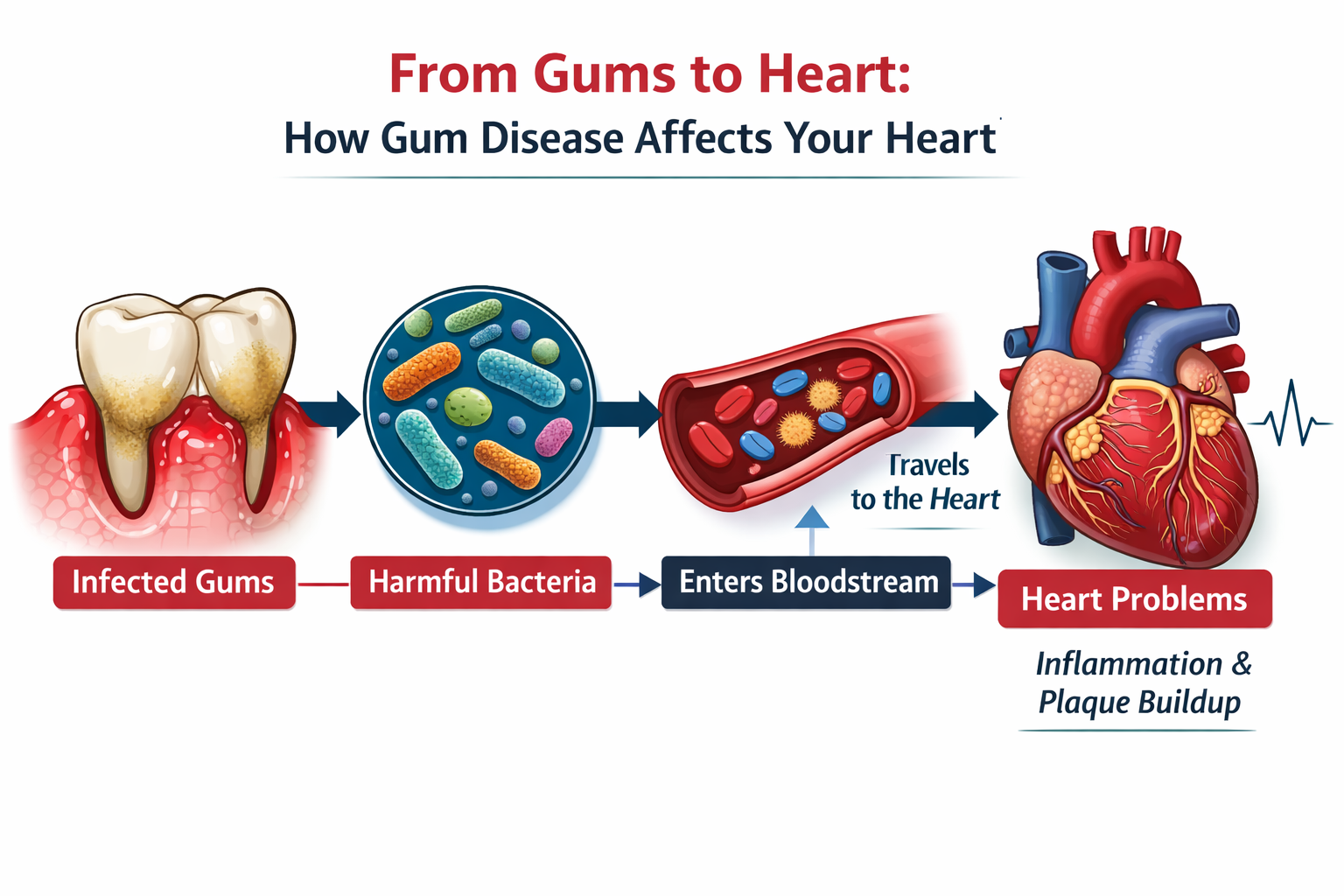
Gum disease may affect heart health by allowing harmful bacteria to enter the bloodstream and trigger inflammation. This inflammation can contribute to plaque buildup in blood vessels, increasing the risk of heart disease, stroke, and other heart conditions.
How Are Gum Disease and Heart Health Connected?
1. Bacteria Entering the Bloodstream
Your mouth naturally contains bacteria, most of which are harmless. Everyday activities like brushing, flossing, or eating can allow bacteria to enter your bloodstream.
If you have gum disease, harmful bacteria are more abundant and can enter your bloodstream more frequently. These bacteria can trigger the release of substances that cause inflammation (cytokines). These substances affect the tissues in the mouth and also spread throughout the body.
2. Inflammation and Blood Vessel Damage
The inflammatory substances released in response to these bacteria can damage your body tissues, including your blood vessels. This process contributes to the formation of plaques in your arteries (atherosclerosis), which can lead to a heart attack and stroke.
3. Reduced Chewing and Poor Nutrition
Gum disease is a major cause of tooth damage, which can make chewing difficult. As a result, people may avoid harder, healthier foods like fruits and vegetables and instead choose softer, less nutritious options. This may lead to poor nutrition in people with gum disease.
Since a healthy diet is essential for preventing heart disease, this indirect effect can negatively impact heart health.
4. Effects on Blood Sugar and Diabetes
The presence of these inflammatory substances in your bloodstream can lead to chronic inflammation. Chronic inflammation may reduce your body’s response to insulin, increasing your risk of type 2 diabetes.
Importantly, this relationship works both ways. Diabetes can also increase your risk of gum disease by promoting inflammation and tissue damage.Treating gum disease has been shown to reduce inflammatory substances in your blood, which may help lower the overall risk of heart disease.
Who Is at Higher Risk of Gum Disease?
Gum disease is common among adults, and this may be due to genetic factors or lifestyle choices. Certain habits and conditions increase your risk of having gum disease. They include:
- Smoking
- High blood sugar
- Abnormalities in the structure of the teeth and their supporting structures [2]
- Low socioeconomic status
- Use of illicit drugs
- Poor nutrition
- Obesity
- Poor oral hygiene practices
- Ageing [3]
- Pregnancy
- Genetic disorders such as Down’s syndrome [4]
Signs of Gum Disease You Should Not Ignore
Gum disease often occurs silently. There may be ongoing destruction without obvious signs until the damage is more serious. Hence, you need to pay attention to any early signs of gum disease. Some of these include:
- Gum redness
- Gum pain
- Gum swelling
- Change in gum texture
- Painful chewing
- Gum bleeding
- Gums pulling away from the teeth (Gum recession)
- Bad taste
- Bad breath (Halitosis) [4]
If your gum disease is not treated early, it may progress, leading to increased tooth movement, tooth shifting, and tooth loss.
How to Protect Your Gums and Your Heart
Protecting your gums is a priority. You need to take good care of your gums to prevent irreversible damage. Practising good oral hygiene is the major way to prevent gum disease. Here are some ways that you can protect your gums, thereby protecting your heart:
- Brush for two minutes at least twice daily
- Floss at least once daily
- Brush your tongue
- Use a fluoride toothpaste
- Avoid cigarette smoking
- Reduce alcohol intake
- Treat high blood sugar if present
- Visit your dentist at least once a year [5]
When to See a Doctor or Dentist
Because gum disease often remains hidden until irreversible damage is done, it is important to see a dentist as soon as you notice the early signs of gum disease. It is also advisable to visit your dentist at least once a year for dental checks. This will help detect early signs of gum disease.Dentist visits may be needed more frequently for individuals who are at higher risk of gum disease, e.g., smokers or those with high blood sugar.
Conclusion
Gum disease is a common condition that affects the gums and bones that support the teeth. Bacteria and inflammation are often involved in this disease process, and these are capable of causing diseases in other organs of your body. Good oral hygiene is beyond having a great smile; it is an important step towards protecting your overall health. Practising good oral hygiene is the best way to prevent gum disease and reduce the risk of heart disease.
References
- King S, Chow CK, Eberhard J. Oral health and cardiometabolic disease: understanding the relationship. Internal Medicine Journal. 2022 Feb;52(2):198–205. doi:10.1111/imj.15685 Available from: https://pmc.ncbi.nlm.nih.gov/articles/PMC9275292/
- Kwon T, Lamster IB, Levin L. Current Concepts in the Management of Periodontitis. Int Dent J. 2021 Feb 19;71(6):462–76. doi:10.1111/idj.12630 PubMed PMID: 34839889; PubMed Central PMCID: PMC9275292. Available from: https://pmc.ncbi.nlm.nih.gov/articles/PMC9804916/
- Darby I. Risk factors for periodontitis & peri‐implantitis. Periodontol 2000. 2022 Oct;90(1):9–12. doi:10.1111/prd.12447 PubMed PMID: 35913624; PubMed Central PMCID: PMC9804916. Available from: https://www.ncbi.nlm.nih.gov/books/NBK554590/
- Gasner NS, Schure RS. Periodontal Disease. In: StatPearls [Internet]. Treasure Island (FL): StatPearls Publishing; 2026 [cited 2026 Apr 20]. Available from: http://www.ncbi.nlm.nih.gov/books/NBK554590/
- CDC. Oral Health [Internet]. 2025 [cited 2026 Apr 20]. Oral Health Tips for Adults. Available from: https://www.cdc.gov/oral-health/prevention/oral-health-tips-for-adults.html
Disclaimer:
The information provided on this website is for general educational and informational purposes only. It is not intended to replace professional medical advice, diagnosis, or treatment. Always seek the advice of your physician or other qualified health provider with any questions you may have regarding a medical condition.
Published April 22, 2026