What Your Vaginal Discharge May Be Trying to Tell You
Medical Writer: Oke Ikpekpe, MSc (PH)
Medical Reviewer: Azuka Chinweokwu Ezeike, MBBS, FWACS, FMCOG, MSc (PH)
Highlights
- Normal vaginal secretions help keep the vagina healthy and protected.
- The appearance of discharge can change naturally throughout the menstrual cycle.
- Clear or white discharge is usually normal, while yellow, green, grey, or blood-stained discharge may need medical attention.
- Bacterial vaginosis, yeast infections, and trichomoniasis are common causes of abnormal discharge.
- Itching, pain, bleeding, or a strong odour may indicate a need for medical assessment.
- Persistent or recurrent symptoms should be evaluated by a healthcare professional.
Introduction
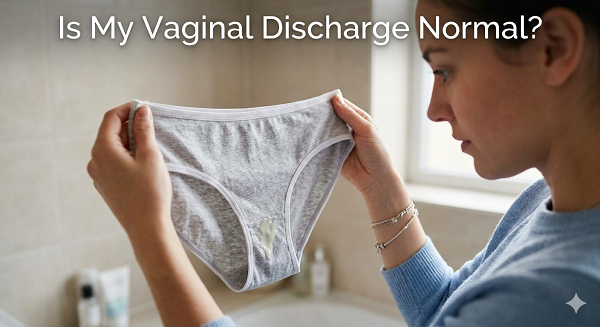
Vaginal discharge is a common experience for many women, especially during the reproductive years [1]. In many cases, it is a normal part of how the vagina cleans and protects itself [2].
While it is something many women experience, it is not always something they feel comfortable talking about.Sometimes, it is completely normal. Other times, a change in colour, smell, amount, or texture may be your body's way of telling you that something needs attention [2].
So, how do you know what is normal and when to speak with a doctor?In this article, we'll explain what normal vaginal discharge may look like, why it changes at different times, what different colours, smells, and textures may mean, and the signs that should not be ignored.
What Does Normal Vaginal Discharge Look Like?
Normal vaginal discharge is usually clear or white and has little or no odour [2]. It is made up of fluid and mucus produced by the vagina and cervix. The amount, appearance, and consistency of discharge can vary from person to person, so what is normal for one woman may not be exactly the same for another [1,2].
This is why it's so important to know what's normal for you, because not every change in vaginal discharge means something is wrong.
What Different Colours of Vaginal Discharge May Mean
The colour of your vaginal discharge can sometimes provide initial clues about what is happening in the body. However, colour alone cannot confirm the cause [1,2].
Clear, White or Milky White
Clear or white discharge is usually a normal sign of vaginal health, especially when it is not associated with itching, irritation, pain, or a strong odour.
Yellow or Green
If your discharge turns yellow or green and comes with itching, burning, or discomfort, it is often a sign of an infection. In some cases, this specific colour shift points to a sexually transmitted infection (STI) called trichomoniasis [1]. That said, a very pale yellow discharge without other symptoms may sometimes be normal.
Grey
Grey vaginal discharge is often a sign that the healthy bacteria in the vagina are out of balance, a common feature of bacterial vaginosis [1,2].
Pink, Brown, or Red
This is usually just a bit of old blood, often showing up right before or after your period. But if you notice bleeding at other times, like between periods, after sex, or after menopause, it's worth checking in with your health care provider [1,2].
What the Smell and Texture of Vaginal Discharge May Be Telling You
The smell and texture of vaginal discharge can provide additional clues [1,2,3].
A Fishy Smell
A strong fishy odour, especially one that becomes more noticeable after sex, is commonly associated with bacterial vaginosis.
A Frothy Texture
If you notice your discharge looks kind of frothy, that is, like foam or bubbles, it may be a sign of trichomoniasis.
Thick and Clumpy
If your discharge is thick, white, and lumpy, almost like cottage cheese, it's most likely a yeast infection (candidiasis). This happens when the naturally present Candida fungus grows out of balance.
Sticky or Mucoid
Sticky or mucus-like discharge is often a normal part of the menstrual cycle and is not usually a cause for concern.
Why Vaginal Discharge Changes at Different Times
Vaginal discharge does not stay the same throughout life or even throughout the month. Hormonal changes play a major role in determining how much discharge is produced and what it looks like [1]. Vaginal discharge can vary with age, the menstrual cycle, contraceptive use, pregnancy, sexual stimulation, and oestrogen levels [1,2].
Here are some common times when discharge may change:
Your Menstrual Cycle
For much of the menstrual cycle, discharge may be thick and sticky [1].Around ovulation, it often becomes clearer, wetter, and stretchier, similar to raw egg white. This is a normal response to hormonal changes [1,2].After ovulation, discharge may become thicker again [1].
Pregnancy
It is common for vaginal discharge to become heavier and more noticeable during pregnancy [1,2].
Life Stages
Many women notice changes in vaginal discharge during puberty or while using hormonal contraceptives [1,2].As menopause approaches and oestrogen levels decline, the amount of vaginal discharge typically decreases [1,2].
Sexual Arousal
Sexual stimulation naturally increases the production of clear vaginal lubrication [1].
Common Infections That Can Cause Vaginal Discharge
Several infections can cause changes in vaginal discharge. In many cases, abnormal discharge is caused by one of these three common conditions:
Bacterial Vaginosis (BV)
Bacterial vaginosis occurs when the natural balance of bacteria inside the vagina gets disrupted [1].If you have BV, you might notice a thin white or grey discharge with a strong fishy smell, especially after sex [1,2,3]. BV usually doesn't cause much itching or irritation [2].
Yeast Infection (Candidiasis)
A yeast infection is simply an overgrowth of Candida fungus, which naturally lives in your vagina. It causes itching, burning, and a thick, white discharge. Unlike some other infections, it usually doesn't have a strong smell [2].
Trichomoniasis
Trichomoniasis is a sexually transmitted infection caused by a tiny parasite called Trichomonas vaginalis [1].It can cause a yellow-green or frothy discharge with a bad smell [2, 4]. You might also have itching, soreness, redness, or pain when you pee. If you have it, your partner may also need treatment to stop it from recurring [2].
Other Infections and Conditions That Can Cause Vaginal Discharge
There are a few other conditions that can also cause changes in your discharge [1,2].
Cervicitis
Cervicitis is inflammation of the cervix, the lower part of the uterus. It's sometimes caused by sexually transmitted infections like chlamydia or gonorrhoea [2,4]. You might also notice bleeding after sex, between periods, or have pelvic pain or discomfort [2].
Aerobic Vaginitis (AV)
Aerobic vaginitis is caused by an overgrowth of certain bacteria, which leads to inflammation in the vagina. It can cause a yellow or greenish discharge that feels sticky and has a foul or rotten smell, along with soreness and irritation. Because its symptoms are similar to trichomoniasis, proper testing is important to get the right diagnosis [5].
Foreign Objects
In rare cases, a forgotten tampon or another object left in the vagina can cause a foul-smelling discharge [2].
Other less common causes of abnormal vaginal discharge include contact or vulvar dermatitis (irritation caused by products such as soaps, perfumes, or detergents), cervical polyps, and, rarely, certain cancers of the reproductive tract [1,2].
Signs Your Vaginal Discharge May Need Medical Attention
Vaginal discharge may need medical attention when it changes from what is normal for you, especially if the change involves [2]:
- Colour
- Consistency or texture
- Amount
- Smell
Changes in discharge are more concerning when they occur alongside other symptoms, such as [1,2]:
- Itching or soreness around the vagina or vulva
- A strong or unpleasant odour
- Burning or pain when urinating
- Pain during sex
- Lower abdominal or pelvic pain
- Bleeding between periods or after sex
- Fever or feeling generally unwell
These symptoms may indicate an infection or another condition that requires medical assessment.
When to See a Doctor About Vaginal Discharge
Although many changes in vaginal discharge are harmless, it is important to seek medical advice when you are unsure of the cause or when symptoms do not improve [2].
You should speak with a healthcare professional if[1,2,6]:
- Your discharge changes noticeably from your usual pattern, and you are concerned about the cause
- Symptoms keep returning after treatment
- You are pregnant and notice unusual changes in your discharge
- You have persistent symptoms that do not improve
- You experience severe pelvic pain, fever, or unusual bleeding
A healthcare professional can assess your symptoms, perform appropriate tests if needed, and recommend treatment based on the underlying cause.
Tips for Supporting Vaginal Health
While many changes in vaginal discharge are harmless, some healthy habits can help maintain the natural balance of the vagina and reduce irritation [2]:
- Avoid douching, as it can disturb the normal vaginal environment [2, 5].
- Avoid perfumed vaginal products and harsh soaps, which may cause irritation [2].
- Practise safer sex, including condom use, to reduce the risk of sexually transmitted infections [2, 4].
- Avoid self-treating with over-the-counter medicines without knowing the cause of your symptoms, as the wrong treatment may delay proper diagnosis and care [2].
- Use antibiotics only when prescribed and necessary. Antibiotics can disrupt the normal vaginal flora, allowing Candida to overgrow and cause a yeast infection.
Conclusion
Not all vaginal discharge is abnormal. The most important thing is to notice changes from your usual pattern and whether those changes are accompanied by symptoms such as itching, irritation, pain, pelvic discomfort, or unusual bleeding. If something feels off or you're unsure, don't hesitate to reach out to a healthcare provider. Most causes of abnormal discharge are easily treatable, and there's no shame in asking for help.
Frequently Asked Questions About Vaginal Discharge
1. Is it normal to have discharge every day?
Yes, experiencing vaginal discharge every day is normal unless it changes colour, consistency, or is accompanied by itching, pain, a strong odour, or unusual bleeding.
2. Can sexual activity affect my vaginal discharge?
Yes. Sexual stimulation naturally increases clear discharge. However, changes after sex, especially with strong odour, irritation, or discomfort, may need medical attention. Unprotected sex can also introduce bacteria or STIs that cause infections.
3. Can hormonal contraception affect my vaginal discharge?
Yes. Hormonal contraceptives like the pill, patch, ring, or injection can change the amount and consistency of your discharge due to hormone changes.
4. Is a strong odour from vaginal discharge always a sign of an infection?
Not always, but it's a strong warning sign, especially if accompanied by colour change, itching, pain, or irritation. A fishy smell is commonly linked to bacterial vaginosis, while other infections can also cause unpleasant odours.
References
- Rao VL, Mahmood T. Vaginal discharge. Obstet Gynaecol Reprod Med. 2020;30(1):11-18. Available from: https://www.sciencedirect.com/science/article/abs/pii/S1751721419302064
- Sim M, Logan S, Goh LH. Vaginal discharge: evaluation and management in primary care. Singapore Med J. 2020;61(6):297-301. doi:10.11622/smedj.2020088. Available from: https://pmc.ncbi.nlm.nih.gov/articles/PMC7905126/
- Anandan V, Kayalvizhi A, Vijayabhaskar C, Sobimeena RM. A study on vaginal discharge in females attending sexually transmitted diseases outpatient department. Int J Res Dermatol. 2022;8(3):314-319. Available from: https://www.ijord.com/index.php/ijord/article/view/1520
- Dorjey Y, Wangmo D, Tshomo D. Assessment of excessive vaginal discharge among women who presented to Phuentsholing General Hospital: a hospital-based study. Health Sci Rep. 2022;5(5):e793. doi:10.1002/hsr2.793. Available from: https://pmc.ncbi.nlm.nih.gov/articles/PMC9436175/
- Kadhim IK, Ahmed MM, Abood ZH. Studying the possible factors influencing the physical characteristics of abnormal vaginal discharge and their correlation with the type of pathogens. Int J Med Toxicol Leg Med. 2025;28(5). Available from: https://www.researchgate.net/publication/393404751_Studying_the_Possible_Factors_Influencing_the_Physical_Characteristics_of_Abnormal_Vaginal_Discharge_and_Their_Correlation_with_the_Type_of_Pathogens
- Khadka S, Khatri R, Chaudhary R. Infective vaginal discharge among women of the reproductive age in the outpatient department of a primary care centre. J Nepal Med Assoc. 2024;62(270):103-105. doi:10.31729/jnma.8432. Available from: https://pmc.ncbi.nlm.nih.gov/articles/PMC10924518/
Disclaimer:
The information provided on this website is for general educational and informational purposes only. It is not intended to replace professional medical advice, diagnosis, or treatment. Always seek the advice of your physician or other qualified health provider with any questions you may have regarding a medical condition.
Published 22, 2026