What Your Urine Colour Means for Your Health
Author: Preeti Prangya Panda, MSc Biotechnology
Medical Reviewer: Nnenna Chiloli, MBBS, MPH
Highlights
- Urine colour reflects hydration levels and overall health, primarily due to the pigment urochrome.
- Drinking more or less water directly affects the colour of urine by altering its concentration.
- Foods, supplements, medications, and certain medical conditions can temporarily or persistently alter urine colour.
- Unusual urine colours can signal issues ranging from dehydration to infections or liver problems.
- Regular or unexplained urine colour changes, especially with symptoms like pain or jaundice, require medical evaluation.
- Maintaining kidney and urinary health depends on good hydration, balanced nutrition, healthy habits, and regular check-ups for at-risk individuals.
Introduction
Human urine is approximately 95% water and contains around 3,000 components, including urea, uric acid, salts, and other trace substances [1]. Urine isn’t just a waste; it carries important clues about your bodily functions [2].
Its colour, texture, and odour can indicate an underlying condition or disease. Generally, the pale yellow urine resembling the colour of lemonade indicates good hydration. Drinking more water can dilute the pigment in the urine, while drinking less water can make it more concentrated. An adult should aim for nearly 2.5 to 3.5 litres of total water each day to allow for the daily excretion of 2–3 litres of dilute urine.
Most colour changes are harmless, but knowing what your urine colour means for your health can help you catch a problem early.
What Gives Urine Its Colour?
Under normal conditions, the tint of urine comes from a pigment called urochrome, formed from the breakdown of haemoglobin (what gives your blood its red colour) [3]. Kidneys have their own filter machinery to remove this urochrome, along with undesirable substances, through urine.
More water dilutes the urine, reducing the colour to pale yellow, while less water makes it more concentrated, increasing the colour to amber. It's similar to adding water to your beetroot juice makes it lighter in shade, while pure ones are redder. Thus, it's the game of the water that changes the colour; the pigment quantity remains the same.
The more concentrated your urine is, the more difficult it is to pass from your bladder, which irritates the walls of the bladder, causing burning sensations [4]. Hence, under normal conditions, drinking a lot of water can make your body clean, normalise the urine colour, and get you rid of these burning sensations.
Factors Affecting the Colour of the Urine
Certain factors can impact the colour of the urine. Some can be normal, while some can be warning signs for some diseases. Here are some:
- Hydration: Urine colour is an appropriate marker of hydration (the amount of water in your blood).
- Diet & Supplements: Some foods, such as carrots and beets, contain specific coloured pigments that change urine colour.
- Medications: Certain drugs dye your urine.
- Health conditions: Some colours may signal health issues such as kidney stones, tumours, or liver problems.
The Urine Colour Guide: What Each Shade May Mean
Here is a list of the colour spectrum for urine that can help guide you through any medical conditions [2].
Clear or Colourless
Clear and colourless urine looks just like clear water, indicating that you’re well hydrated or may be over-hydrated. Chronic overhydration (taking too much fluid) can dilute some important salts in your body, which is not a problem for most people. However, regular, clear urine can be a medical issue, like a kidney problem such as salt-wasting nephropathy or damage to the kidneys.
High blood sugar as in diabetes mellitus leads to increased urine production, making the urine clearer. Diabetes insipidus is also a rare condition in which the kidneys cannot retain water, leading to more water consumption, causing clear urine. Hence, it is important to see a doctor if the urination is unusual or more frequent.
Pale Yellow
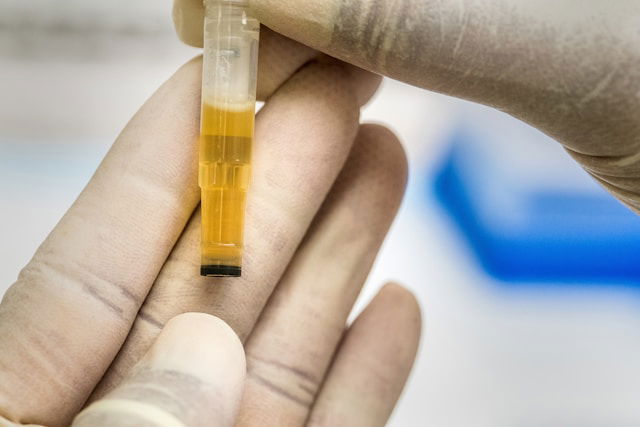
Pale yellow (amber) is the ideal colour of urine, which signals that you’re well hydrated with the normal dilution of urochrome. This is similar to weak lemonade.
Dark Yellow
A deeper yellow colour like apple juice signals dehydration. A lack of water in the body pulls more water into the filtrate during urine formation, thereby concentrating the urochrome pigment. This makes the urine darker. It can also cause strong-smelling urine as it is concentrated.
Orange
Orange urine can occur due to dehydration or from certain foods or medicines. Some foods containing vitamin A, such as beta carotene-rich foods like carrots, sweet potatoes, and pumpkins, can give urine an orange tint when consumed in large amounts.
Apart from this, medications such as phenazopyridine (used for bladder pain) or sulfasalazine can also turn urine orange. In rare cases, bright orange urine with pale stool may mean bile isn’t reaching the gut (a liver or bile duct issue).
Pink or Red
Highly pigmented foods, such as beets or blackberries, can make urine appear pinkish-red. Some medications, like rifampin, can also have a similar effect. The presence of pigment in the urine is harmless; however, blood in the urine can be a matter of concern.
Blue or Green
These are very unusual. Often this comes from dyes in food or medications. For instance, amitriptyline or indomethacin can make urine bluish-green. Certain medical tests use a blue dye such as methylene blue that can colour urine [5]. A rare cause is a bacterial infection, such as Pseudomonas can tinge urine blue-green [3].
Brown or Cola-Coloured
Very dark brown urine can occur if you’re very dehydrated and possibly sunburned or experiencing heatstroke, or after intense exercise, muscle breakdown can release myoglobin (oxygen-absorbing protein in the muscles) [3]. It can also come from eating lots of asparagus or as a side effect of drugs like methocarbamol (skeletal muscle relaxant).
Importantly, a cola-colour urine may signal bilirubin in the liver as seen in hepatitis or blocked bile ducts. Malaria can also cause very dark urine, a condition called blackwater fever. This happens because the malarial infection destroys red blood cells very quickly, releasing the pigment haemoglobin into the urine. Persistent brown urine needs medical evaluation [6].
Cloudy or Milky White
Cloudiness usually means something is suspended in the urine. The most common cause is a urinary tract infection or kidney stones. Bacteria, white blood cells, or crystals can make urine look cloudy [7]. Sometimes dehydration can concentrate urine so much that it appears cloudy. In rare cases, conditions like pre-eclampsia (in pregnancy) can cause foamy or milky urine. If cloudy urine is new or comes with pain or fever, see a doctor.
Bloody Urine
Blood in the urine can be an alarming sign. This condition is called haematuria. Here are some of the conditions that can cause haematuria.
Urinary tract infections (UTIs): A UTI can make the bladder bleed, causing the urine to look red.
Bladder or kidney stones: Stones can scratch or block the urinary tract, leading to visible or hidden blood in the urine.
Enlarged prostate: An enlarged prostate can press on the urethra and cause trouble peeing and blood in the urine.
Kidney disease: Kidney diseases like glomerulonephritis can make tiny kidney filters swell and leak blood into the urine.
Cancer: Advanced kidney, bladder, cervical or prostate cancer can cause visible blood in the urine.
Inherited illnesses: Conditions like sickle cell anaemia or Alport syndrome can cause blood to appear in the urine.
Kidney injury: A hit or injury to the kidneys from an accident or sports can cause blood to show up in the urine.
Medicines: Some drugs, such as certain cancer treatments, antibiotics, or blood thinners, can lead to blood in the urine.
Hard exercise: Intense exercise or contact sports can temporarily cause blood to appear in the urine [8].
When to See a Doctor
Most colour changes are temporary and harmless, but some patterns need attention. See a healthcare provider if you have:
Blood in Urine (red/pink): Even if you ate beetroot, ensure it’s not blood. Blood in urine is common with UTIs or kidney stones, often with pain, but painless bleeding can signal something more serious (like cancer). Don’t ignore red or pink urine.
Deep Orange or Brown with Other Symptoms: Very dark urine accompanied by yellowing of the skin or eyes or jaundice could mean a liver problem. Also, see a doctor for brown urine if you feel unusually weak or ill.
Persistent Unusual Colour: If you notice an unusual urine colour that isn’t explained by foods or meds and it lasts more than a day or two, get it checked.
Cloudy, Smelly, or Painful Urination: These often mean an infection. If your urine becomes cloudy or you feel burning sensations and pain when peeing, see a doctor for evaluation.
How to Keep Your Urine (and Kidneys) Healthy
Stay Well-Hydrated: Drink plenty of water every day. Aim for about 6–8 glasses (around 2.5 to 3.5 litres/day) under normal conditions. In hot weather or during exercise, drink more. Monitoring your urine colour is an easy trick; it should stay pale straw yellow. If it’s darker, drink extra water.
Choose Water and Healthy Drinks: Water has no sugar or additives and is the best choice for kidney health. Juices or sports drinks can count toward fluids, but sugary or alcoholic drinks may make you lose fluid faster.
Eat a Balanced Diet: Plenty of fruits and vegetables not only nourish you but also add hydration. Limiting salt and heavily processed foods helps the kidneys by reducing their workload [9]. For example, drinking enough fluids helps the kidneys flush out excess sodium and waste.
Healthy Habits: It is important to empty your bladder when you need to. So, don’t hold it. Moderate exercise and a healthy weight also support kidney function. Avoid extreme workouts without rehydrating, as intense muscle breakdown can strain the kidneys [9]. Keep chronic conditions like blood pressure and diabetes well-controlled, as they can affect kidney health.
Regular Check-ups: If you have risk factors such as diabetes, high blood pressure, family history of kidney disease, etc., see your doctor regularly. Kidney function is often tested via blood and urine samples. Early detection of any issue is key to treatment.
Conclusion
Urine colour is a sign of the water status in the body, use of medications, and some chronic conditions. Most of the time, it ranges from clear to pale yellow, and this is usually normal..
The problem arises when the abnormal urine colour is persistent and is caused without consuming any pigmented food items. Don’t panic immediately; rather, check if something you ate or a new supplement could be the cause.
Pay attention to persistent red, brown, cloudy, or very dark urine that deserves medical advice. By staying hydrated and healthy, you can keep your body in good condition with normal functioning of the kidneys, ultimately producing proper urine.
Frequently Asked Questions (FAQs)
What does dark urine mean in a female?
Dark urine in females often indicates dehydration, causing the urine to become more concentrated. It can also signal underlying issues such as liver problems like hepatitis, medications, or urinary tract infections (UTIs) if the colour persists. During menstruation, the menstrual blood can also make the urine darker.
What does your pee look like when you have a kidney infection?
Urine during a kidney infection is often cloudy, foul-smelling, or may contain blood. It can also appear darker than usual and is usually accompanied by symptoms like fever or back pain.
Is clear urine a sign of kidney failure?
Clear urine usually means high fluid intake or overhydration rather than kidney failure. In rare cases, persistently clear urine can reflect the kidneys’ inability to concentrate urine, but this requires medical evaluation.
References
1. Ferrão AR, Pestana P, Borges L, Palmeira-de-Oliveira R, Palmeira-de-Oliveira A, Martinez-de-Oliveira J. Quantification of Ions in Human Urine—A Review for Clinical Laboratories. Biomedicines [Internet]. 2024 [cited 2025 Nov 19]; 12(8):1848. Available from: https://www.ncbi.nlm.nih.gov/pmc/articles/PMC11351741/.
2. Queremel Milani DA, Jialal I. Urinalysis. In: StatPearls [Internet]. Treasure Island (FL): StatPearls Publishing; 2025 [cited 2025 Nov 19]. Available from: http://www.ncbi.nlm.nih.gov/books/NBK557685/.
3. Balen C, Chishti Z, Wilson JW. Diagnostic Approach to Abnormal Urine Colors: Lessons From a Case of Blue-Green Urine. Cureus [Internet]. [cited 2025 Nov 19]; 17(4):e82122. Available from: https://www.ncbi.nlm.nih.gov/pmc/articles/PMC12066962/.
4. Mehta P, Leslie SW, Reddivari AKR. Dysuria. In: StatPearls [Internet]. Treasure Island (FL): StatPearls Publishing; 2025 [cited 2025 Nov 19]. Available from: http://www.ncbi.nlm.nih.gov/books/NBK549918/.
5. Lionardi SK, Hengky A, Haruman SP. Blue-green urine in traditional medicine consumption: a case report and review of the literature. Renal Replacement Therapy [Internet]. 2024 [cited 2025 Nov 19]; 10(1):15. Available from: https://doi.org/10.1186/s41100-024-00524-4.
6. Beckingham IJ, Ryder SD. Investigation of liver and biliary disease. BMJ [Internet]. 2001 [cited 2025 Nov 19]; 322(7277):33–6. Available from: https://www.ncbi.nlm.nih.gov/pmc/articles/PMC1119305/.
7. Bono MJ, Leslie SW. Uncomplicated Urinary Tract Infections. In: StatPearls [Internet]. Treasure Island (FL): StatPearls Publishing; 2025 [cited 2025 Nov 19]. Available from: http://www.ncbi.nlm.nih.gov/books/NBK470195/.
8. Kumar R, Kumar S, Kumar A, Kumar D, Kumar V. Exercise-Induced Rhabdomyolysis Causing Acute Kidney Injury: A Potential Threat to Gym Lovers. Cureus [Internet]. [cited 2025 Nov 19]; 14(8):e28046. Available from: https://www.ncbi.nlm.nih.gov/pmc/articles/PMC9477545/.
9. Healthy Eating for Adults with Chronic Kidney Disease - NIDDK. National Institute of Diabetes and Digestive and Kidney Diseases [Internet]. [cited 2025 Nov 19]. Available from: https://www.niddk.nih.gov/health-information/kidney-disease/chronic-kidney-disease-ckd/healthy-eating-adults-chronic-kidney-disease.
Disclaimer:
The information provided on this website is for general educational and informational purposes only. It is not intended to replace professional medical advice, diagnosis, or treatment. Always seek the advice of your physician or other qualified health provider with any questions you may have regarding a medical condition.
Published December 2, 2025