What Are the Normal Milestones for Babies and Toddlers?
Author: Nnenna Chiloli, MBBS, MPH
Medical Reviewer: Azuka Chinweokwu Ezeike, MBBS, FWACS, FMCOG, MSc (PH)
Highlights
- Developmental milestones are specific skills or behaviours most children achieve by a certain age.
- Developmental milestones help track growth, celebrate progress, and identify potential issues early, leading to better outcomes.
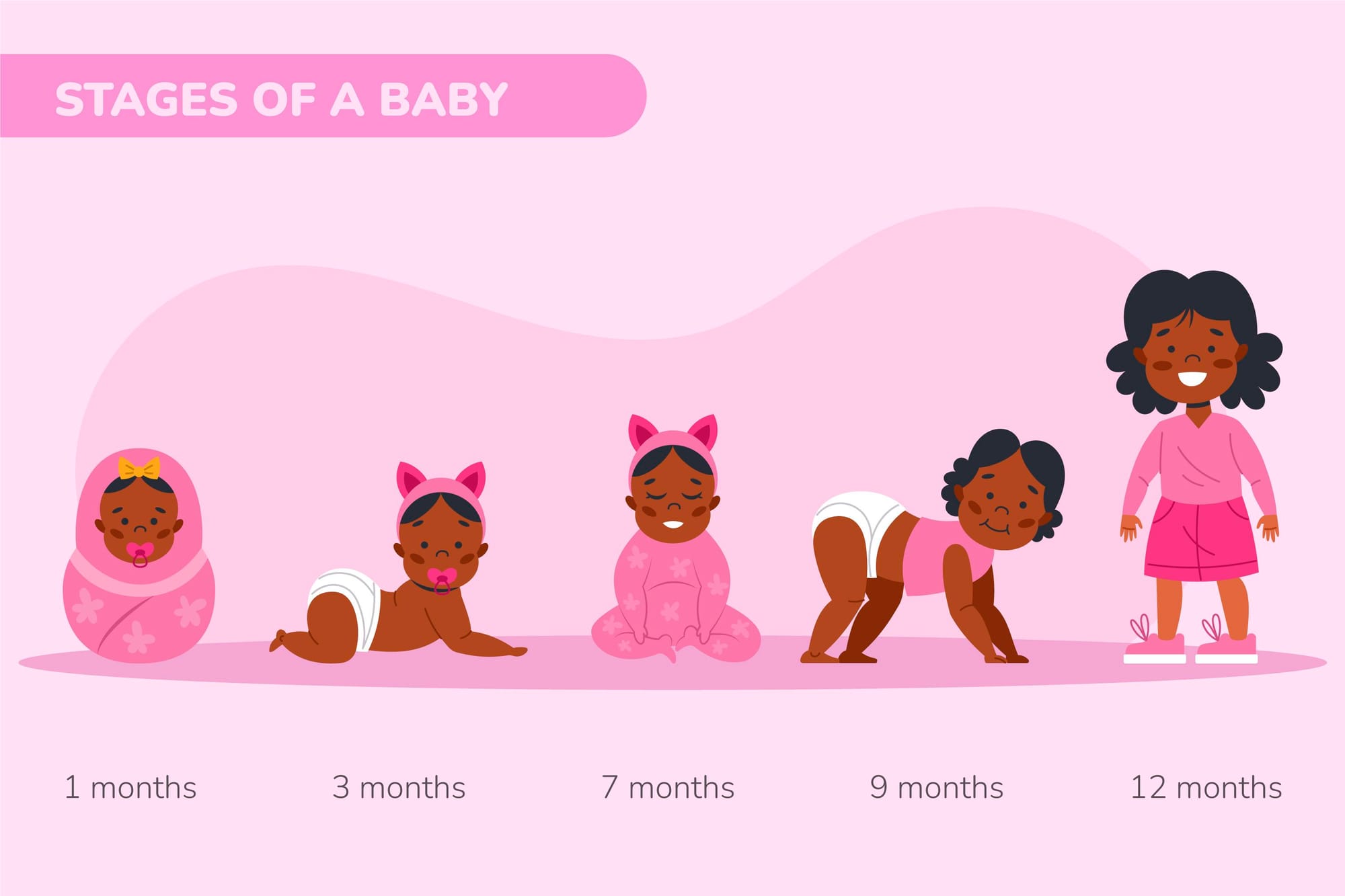
- At 0-2 months, babies move arms/legs, hold their head up briefly, recognise faces, coo, and smile at people.
- At six months, babies typically roll over, sit with support, reach for toys, and respond to their emotions.
- At 12 months, babies walk holding on, say “mama/dada”, understand “no”, and point to show interest.
- Things to worry about in your baby include loss of skills, no eye contact, not responding to sound or name, or extreme behaviours.
- Support your baby’s development by talking, playing, and reading with your baby, providing tummy time and safe spaces to explore.
- See a doctor if you have concerns about your baby’s development or if the baby is not meeting milestones or is losing the skills acquired before.
Introduction
Watching your baby grow and learn things is one of the most exciting parts of being a parent. Every smile, every new sound, and every step forward is a moment to celebrate. But as a mother or caregiver, you may also wonder: Is my baby developing normally? What should I expect at each age?
This article will help you understand developmental milestones, the skills and behaviours most babies and toddlers learn as they grow. You will learn what to look for at each age, when to seek help, and simple ways you can support your child’s development at home.
What Are Developmental Milestones?
Developmental milestones are specific skills or behaviours that most children are expected to achieve by a certain age [1, 2 ]. These milestones help parents, caregivers, and healthcare providers track how a child is growing and learning.
Milestones fall into four main areas:
Motor skills
Motor skills include how your baby moves, such as rolling, sitting, and walking
Cognitive Skills
Cognitive skills include how your baby thinks and learns, such as playing with toys and solving simple problems.
Social and Emotional Skills
Social and emotional skills include how your baby interacts with others, such as smiling, playing, and showing feelings.
Language and Communication Skills
Language and communication include how your baby understands and uses words, e.g., cooing, babbling, and talking.
Why Are Milestones Important?
Tracking milestones helps you:
- Understand what is typical for your child’s age
- Celebrate your child’s progress and growth
- Notice early if your child may need extra support
- Get help sooner if there are concerns, which leads to better outcomes
Research shows that early identification and intervention for developmental delays can significantly improve a child’s long-term development and learning [3].
Every child develops at their own pace. Some babies may reach milestones a bit earlier or later than others. However, if you notice your child is not reaching several milestones or is losing skills they once had, it's important to talk to your doctor.
Milestones by Age Group
Below is a guide to what most babies and toddlers can do at different ages. Remember, this is a general guide. Your baby may do some things earlier or later.
0–2 Months
What to expect:
Motor Skills:
- Moves arms and legs actively
- Holds head up briefly when on tummy
- Opens and closes hands
Cognitive Skills:
- Looks at faces and follows objects with eyes
- Begins to recognise familiar people
Social and Emotional Skills
- Calms down when picked up or spoken to
- Looks at the parent's face
- Begins to smile at people [1]
Language and Communication Skills
- Makes cooing sounds
- Turns head towards the sounds
- Cries to communicate needs
3–4 Months
Motor Skills
- Better head control when supported
- Pushes up on elbows during tummy time
- Reaches for and grasps toys
- Brings hands together
Cognitive Skills
- Watches faces closely
- Follows moving objects with eyes
- Recognises familiar people at a distance
- Explores hands by looking at them and bringing them to the mouth
Social and Emotional Skills
- Smiles on their own
- Laughs and shows joy
- Enjoys playing with people
Language and Communication Skills
- Coos and babbles
- Copy some sounds you make
- Cries differently for different needs, such as when hungry, tired, or wet.
5–6 Months
Motor Skills
- Rolls over from tummy to back and back to tummy
- Sits with support
- Reaches for toys with one hand
- Transfers objects from one hand to the other
- Puts things in the mouth to explore
Cognitive Skills
- Looks around at nearby things
- Shows curiosity about objects
- Reaches for objects they want
- Begins to understand cause and effect, for example, shaking a rattle makes noise
Social and Emotional Skills
- Knows familiar faces and may be wary of strangers
- Likes to look at himself in the mirror [4]
- Responds to the emotions of others
Language and Communication
- Responds to their name
- Makes sounds to show joy or displeasure
- Takes turns making sounds with you
7–9 Months
Motor Skills
- Sits without support
- Moves forward by crawling or rolling
- Picks up small objects with thumb and fingers
- Transfers objects from hand to hand
Cognitive Skills
- Looks for objects when dropped
- Plays peek-a-boo (react to you covering your face with your hands and then removing your hands with smiles or laughs)
- Puts objects in and out of containers
- Use fingers to point at things
Social and Emotional Skills
- May be afraid of strangers
- May be clingy with familiar adults
- Has favourite toys
- Looks at you when you call their name
Language and Communication
- Understands ”no”
- Makes many different sounds like “mamamama” and “babababa.”
- Copies sounds and gestures
- Points with finger to show interest
10–12 Months
Motor Skills
- Pulls to stand and stand holding on
- May take a few steps, holding on to furniture
- Sits down from standing
- Uses pincer grasp well (picks up small objects with thumb and finger)
- Drinksfrom a cup with help
Cognitive Skills
- Explores objects in different ways, e.g., shaking, banging, dropping.
- Finds hidden objects easily
- Copies gestures like waving bye-bye
- Puts objects into containers and takes them out
Social and Emotional Skills
- Shy or nervous with strangers
- Cries when the parent leaves
- Has favourite people and toys
- Shows fear in some situations
- Hands you a book when wanting to hear a story
Language and Communication
- Says “mama” and “dada” to the right person
- Says one or two other words
- Understands simple instructions like “come here.”
- Waves bye-bye
- Points to ask for something or get help
12–18 Months
Motor Skills
- Walks without support
- May run unsteadily
- Pulls toys while walking
- Can help undress themselves
- Drinks from a cup
- Eats with a spoon (messily)
- Scribbles with crayons
- Stacks two to four blocks
Cognitive Skills
- Knows what ordinary objects are used for, e.g., a spoon, cup, phone
- Shows interest in dolls or stuffed animals
- Points to get the attention of others
- Follows simple directions like “pick up the toy.”
- Points to one body part when asked
Social and Emotional Skills
- Likes to hand things to others as play
- Shows affection to familiar people
- May have temper tantrums
- Plays simple pretend games like feeding a doll
- May cling to caregivers in new situations
- Explores alone but with a parent close by
Language and Communication
- Says several single words
- Shakes head “no.”
- Points to show someone what they want
- Follows one-step commands without gestures
18–24 Months
Motor Skills
- Walks steadily and begins to run
- Climbs on and off furniture without help
- Walks up and down stairs, holding on
- Kicks a ball
- Builds towers of 4 or more blocks
- Begins to draw lines and circles
Cognitive Skills
- Finds objects even when hidden under covers
- Sorts shapes and colours
- Begins pretend play, such as talking on a toy phone
- Follows two-step instructions, for example, pick up your shoes and put them in the closet
- Name objects in a picture book
Social and Emotional Skills
- Copies others, especially older children and adults
- Gets excited around other children
- Shows growing independence (says “no” often)
- Plays mainly beside other children
- Shows defiant behaviour ( doing what is told not to)
Language and Communication
- Points to objects or pictures when named
- Knows names of familiar people and body parts
- Begins to combine two words, such as “mummy up”, “mummy car.”
- Repeats words overheard in conversation
What Signs Show a Child May Be Developing Slower Than Expected?
While every child develops at their own pace, certain signs may indicate that your child needs extra support.
General Warning Signs at Any Age are:
- Loss of skills. Your child stops doing something they used to do
- Not reaching multiple milestones for their age group
- Very stiff or floppy muscles
- No eye contact or social interaction
- Not responding to sounds or their name
- Extreme behaviours ( very passive or very irritable all the time)
Age-Specific Red Flags:
By 6 months
- No social smiles or warm, joyful expressions
- Limited or no eye contact
- Does not respond to sounds [5]
By 9 months
- No back-and -forth sharing of sounds, smiles, or facial expressions
- No babbling
By 12 months
- No gestures like pointing or waving bye-bye
- No single words
By 18 months
- No meaningful two-word phrases
- Does not walk
By 24 months
- Very few words
- No two-word phrases
- Does not follow simple instructions
When Should Parents See a Doctor?
You should contact your doctor or healthcare provider if:
- You have any concerns about how your child is developing
- Your child is not meeting milestones for their age
- Your child loses skills they once had
- Your instinct tells you something is not right
Children at High Risk
Some children have a higher risk of developmental delays and may need closer monitoring. They include:
- Babies born prematurely (before 37 weeks)
- Babies who spent time in the neonatal intensive care unit
- Babies with low birth weight
- Children with genetic conditions or a family history of developmental delays
What can Parents Do at Home to Support Development?
You are your child’s first and most important teacher. Simple, daily activities will give your child extra development opportunities.
Talk
Describe what you are doing while dressing, feeding, and playing with your baby. Point to and name things around you.
Read everyday
Start to read to your baby early. Sing simple songs such as nursery rhymes, and play music. Sing to your baby at bedtime, nappy changes, or when your baby is in the buggy.
Play together
Peek-a-boo teaches social interaction. Imitation games and safe toys are also available.
Provide Tummy Time
Start from day one, when the baby is awake and supervised. Begin with a few sessions a day lasting 3 to 5 minutes. You can increase the number of sessions and duration as your baby gets older.
Create Safe Spaces to Explore
Give your baby safe floor time to move freely. Provide age–appropriate toys that encourage reaching, grasping, and exploring.
Conclusion
Every child is unique and develops at their own pace. As a parent or carer, you know your child much better than anyone else, so trust your instincts. If unsure, visit your healthcare provider.
References
- CDC. Learn the Signs. Act Early. 2025 [cited 2026 Jan 16]. Milestones by 2 Months. Available from: https://www.cdc.gov/act-early/milestones/2-months.html
- Misirliyan SS, Boehning AP, Shah M. Developmental milestones. In: StatPearls [Internet]. Treasure Island (FL): StatPearls Publishing; 2025 [cited 2026 Jan 19]. Available from: http://www.ncbi.nlm.nih.gov/books/NBK557518/
- Sudry T, Zimmerman DR, Yardeni H, Joseph A, Baruch R, Grotto I, et al. Standardization of a developmental milestone scale using data from children in israel. JAMA Netw Open [Internet]. 2022 Mar 14 [cited 2026 Jan 21];5(3):e222184. Available from: https://www.ncbi.nlm.nih.gov/pmc/articles/PMC9907346/
- CDC. Learn the Signs. Act Early. 2025 [cited 2026 Jan 22]. Milestones by 6 Months. Available from: https://www.cdc.gov/act-early/milestones/6-months.html
- Feldman HM. How young children learn language and speech: Implications of theory and evidence for clinical pediatric practice. Pediatr Rev [Internet]. 2019 Aug [cited 2026 Jan 22];40(8):398–411. Available from: https://www.ncbi.nlm.nih.gov/pmc/articles/PMC7236655/
Disclaimer:
The information provided on this website is for general educational and informational purposes only. It is not intended to replace professional medical advice, diagnosis, or treatment. Always seek the advice of your physician or other qualified health provider with any questions you may have regarding a medical condition.
Published January 22, 2026