What Can a Urine Test Tell You About Your Health?
Author: Shibrah Rafaqat, MBBS
Medical Reviewer: Azuka Chinweokwu Ezeike, MBBS, FWACS, FMCOG, MSc (PH)
Highlights:
- Your urine changes colour and chemistry depending on your body’s internal conditions.
- Looking at the physical and chemical picture, a urinalysis helps doctors identify signs of some diseases.
- One abnormal result does not always mean there is a problem. It may simply mean you need further tests to find out more.
- Temporary factors like food, medicines, and intense exercise sometimes distort results.
- To make sure the test is accurate, your clinic will ask you to catch the urine in the middle of the flow so that skin bacteria doesn’t get in the sample.
- If your results are flagged as abnormal, your doctor might request follow-up blood tests, imaging, or a urine culture to confirm a diagnosis.
What is Urinalysis?
A urinalysis (urine test) is one of the most useful and most commonly requested diagnostic tests in modern medicine. It examines the physical appearance and chemical content of your urine. Doctors frequently request this test because instead of checking for a single disease, it screens your urine for a wide variety of health indicators [1].
Doctors rely on these clues for very different reasons. A urinalysis might confirm a suspected infection, catch an early sign of kidney disease, or simply be part of a routine check-up [1].By the end of this article, you should know what a urinalysis actually measures, why your doctor might request one, how to give a sample properly, and how to make sense of the result.
Why Might Your Doctor Request a Urine Test?
You might think a urinalysis is only used to find out if you have a urinary tract infection, but your doctor relies on it for many other reasons:
- As part of your routine health screenings, such as your annual check-ups, pregnancy visits, and pre-surgical checks [1].
- To confirm or rule out whether you have a urinary tract infection, kidney disease, or diabetes.
- To investigate symptoms you might be experiencing, such as painful urination, lower back or flank pain, cloudy urine, or visible blood.
- If you are managing a chronic condition, like chronic kidney disease or diabetes, routine testing is non-negotiable [1].
- To screen you for infection and protein during your pregnancy, which can indicate pre-eclampsia [2].
A urine test can help with all these diagnoses because your urine is essentially a filtered by-product of your blood, meaning its contents often mirror what is happening inside your kidneys, bladder, liver, and your body's overall chemical balance.
What Can a Urinalysis Tell You About Your Health?
Because the kidneys filter blood continuously, urine composition shifts with almost any condition that affects the body's internal chemistry. For example, a single sample can raise or lower suspicion for:
- Kidney function problems
- A urinary tract infection [3]
- Diabetes
- Liver problems, through pigments such as bilirubin and urobilinogen
- Hydration status
- Certain rare metabolic disorders
Urinalysis is not a diagnosis alone for any of these. It simply acts as a filter, pointing your doctor towards which direction to investigate next.
What Does a Routine Urinalysis Check For?
A standard urinalysis is typically carried out in two primary stages, each examining a different aspect of the sample [1,3].
Physical examination
The physical appearance of your urine says a lot. Doctors evaluate appearance by looking at colour, clarity, and odour:
Color:
- Pale yellow to amber: This is the healthy, normal range
- Red or pink: This can be an abnormality indicating the presence of blood, or it can sometimes simply be caused by foods like beetroot.
- Brown: This can indicate liver issues or severe dehydration.
- Bright blue or green: While striking, this is an abnormality usually caused by specific medical dyes, anesthetics, or artificially colored foods.
Clarity:
- Clear: Healthy urine should generally be clear.
- Cloudy: A cloudy appearance is a classic warning sign of a urinary tract infection (UTI) or severe dehydration [1].
Odor:
- Natural smell: Normal urine has a mild, characteristic scent.
- Foul smell: An abnormal, strong odor often points to an infection.
- Sweet or fruity odor: A strangely sweet or fruity odour can indicate uncontrolled diabetes.
Chemical analysis
A treated paper strip (dipstick) is dipped into the sample. This is a thin strip of plastic covered in tiny chemical squares. When dipped into your urine, these squares change colour based on what is detected:
- pH (acidity/alkalinity)
- Protein
- Glucose
- Ketones
- Blood
- Leukocyte esterase (a marker of white blood cells)
- Nitrites (bacterial activity)
- Bilirubin, Urobilinogen
- Specific gravity, which reflects how concentrated the urine is [3]
If these routine physical and chemical screening stages reveal red flags, such as unexpected blood cells or signs of infection, your doctor may order a separate microscopic evaluation or a urine culture to investigate further.
What Can Abnormal Urinalysis Results Mean?
An abnormal result simply means one of your markers was outside the healthy, expected range. Every abnormal marker points toward a different set of possibilities, and your doctor interprets them together rather than in isolation.
- Protein in urine can suggest kidney disease, or pre-eclampsia during pregnancy [1,2].
- Glucose can indicate poorly controlled diabetes, but occasionally, it simply shows that an individual's kidney has a lower threshold.
- Blood (haematuria) may come from a urinary tract infection, kidney stones, an enlarged prostate, or, less commonly, a tumour.
- When leukocytes and nitrites appear together, bacterial infection becomes the main suspicion [3].
- Ketones are seen during fasting, very low-carbohydrate diets, or poorly controlled diabetes.
- Bilirubin in the urine can be an early sign of liver dysfunction or a blocked bile duct.
- In very rare genetic conditions like alkaptonuria, a missing enzyme causes the urine to turn completely black when exposed to the air, which is a vital clue for diagnosis [4].
Does Abnormal Urine Always Mean You Have a Disease?
Not necessarily, and patients usually worry more than they need to. Very often, your urine test results might show mild abnormalities. These can often be traced back to something as ordinary as not drinking enough water. When you are dehydrated, your urine becomes highly concentrated which might trigger a false positive for certain proteins. There are also several other non-disease causes for abnormal test results. It may be a hard gym session the day before, menstrual blood mixing into the sample, or a supplement changing the urine's colour [5].
You might also encounter a harmless pattern called orthostatic proteinuria, where standing for long stretches temporarily raises protein levels; this is usually seen in younger people.If a sample is contaminated by bacteria from your skin during collection, the results might show an infection [5]. That’s exactly why a single unusual result is rarely acted upon immediately.
Your doctor looks at the complete clinical picture, and a repeat test is usually the next step before anyone reaches for a more serious explanation.That said, don't wait on a repeat test if you notice visible blood in your urine, have a fever with back or side pain, or are unable to urinate. Consider these red flags and contact your doctor promptly in these cases.
How Should You Prepare for a Urinalysis?
In most cases, you do not need to do anything special to prepare for a routine urinalysis. You can eat and drink normally before the test, but there are a few details to keep in mind:
- Tell your doctor about any medicines, vitamins or supplements you are taking because several of these can alter your urine’s colour or chemical readings.
- Mention if you are menstruating, as blood contamination can also distort results.
- Stay hydrated but also keep in mind that both under-drinking and over-hydration can distort certain readings.
- Sometimes your doctor might request a first-morning sample specifically. It’s an important instruction to follow since it is naturally more concentrated and gives a clearer picture of some markers.
- Fasting isn’t required for urinalysis, but in some cases a fasting blood test may be done alongside.
How Should You Collect a Urine Sample?
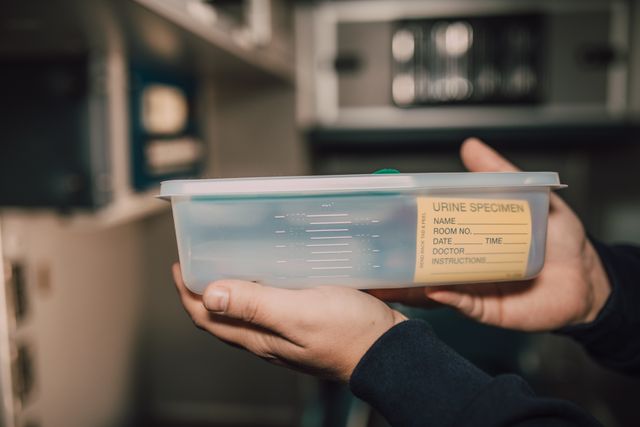
To ensure the results are free from contamination, the clinic will ask you to provide a midstream sample. A clean sample is essential because when it forms in the kidneys, urine is sterile, but as it passes out of the body, it can pick up bacteria, and skin cells. Taking a few moments to properly prepare and collect a midstream sample prevents false alarms, repeat tests, and allows your doctor to get an accurate baseline of your health.The correct process step-by-step is:
1. Wash your hands before touching the collection container.
2. Clean the genital area with the wipe provided, moving front to back, using a fresh wipe for each pass.
3. Let the first bit of urine flow into the toilet; it typically carries bacteria and debris picked up from the skin [6].
4. Bring the container into the stream partway through and collect a small sample, not letting the container touch your skin.
5. Finish urinating into the toilet, then seal the container tightly.
6. Label the sample as instructed and hand it in without delay; leaving it at room temperature too long lets bacteria multiply and skews the reading [5].
Can Food, Medicines or Exercise Affect Urinalysis Results?
Yes, several external lifestyle factors can affect your urine test readings [5]:
- Food: Eating beetroot, blackberries, or rhubarb can temporarily turn your urine pink or red, which can be mistaken for blood [5]. Similarly, asparagus can give urine a strong, unusual odour.
- Medicines and Supplements: Vitamin B supplements can turn urine bright, fluorescent yellow. Certain antibiotics and laxatives are also known to turn urine orange or red.
- Exercise: Sometimes extreme physical exertion can cause small amounts of blood or protein to leak into your urine, but this resolves in a day or two [5].
- Drug Screens: Doctors sometimes use the same sample for a toxicology screen. Eating foods containing unwashed poppy seeds can occasionally trigger a false positive for opiates, as the seeds come from the same plant used to make opium [7].
This doesn’t mean that unusual results should be dismissed, but it does explain why your doctor might ask about diet, supplements and recent activity before giving you an interpretation.
What Is the Difference Between Urinalysis and Urine Culture?
These two tests are often confused because both start with the same sample, but urinalysis is a broader screening test, and urine culture is more specific.While a urinalysis provides a quick, general overview of your urine's chemical and physical properties, a urine culture is a way to analyse the microbiological cause of your symptoms. Understanding the difference can help you understand why your doctor might order one or both tests depending on what their suspicion is.
A urinalysis can suggest that infection, blood or protein might be present, and as the next step, a culture confirms the infection and identifies exactly which organism is responsible [8]. To confirm the infection, the laboratory takes a small amount of the urine sample and places it on a special growth medium (an agar plate) in an incubator for 24 to 48 hours. If bacteria or yeast are present in your urine sample, they multiply into visible colonies, allowing technicians to pinpoint the exact type of germ causing the issue.
In addition, the culture also reveals which antibiotics work against that specific organism, so it helps your doctor determine the most effective antibiotic for your infection.
What Should You Do If Your Urinalysis Result Is Abnormal?
If your urinalysis returns an abnormal result, you shouldn’t panic. It is just a signal to investigate further. Your doctor will review your medical history, discuss any symptoms you are experiencing, and likely recommend follow-up tests.This may include a repeat urinalysis, a urine culture, blood tests, or imaging scans (like an ultrasound) to get a clearer picture of your health. Follow your doctor's guidance closely, and do not hesitate to ask questions if you do not understand your results.
Avoid self-diagnosing from a single number; reference ranges vary slightly between laboratories, and context (age, sex, pregnancy status, medications) changes how a result should be read.
Conclusion
A urinalysis is one of the simplest tests in medicine to perform, yet it provides invaluable information about your overall health. It cannot diagnose a condition by itself, but it helps healthcare providers detect early signs of infections, kidney disease, and diabetes.
Abnormal results can sound alarming, but they are often caused by harmless factors like diet or minor dehydration. By understanding how to properly prepare and provide a clean-catch sample, you can ensure your test is as accurate as possible, helping you and your doctor take proactive steps toward maintaining your well-being.
Frequently Asked Questions (FAQs)
1. Do I need to fast before a urinalysis?
No. Fasting isn't required unless your doctor is also running a fasting blood test at the same appointment.
2. Will a urinalysis always catch a UTI?
Not every time. It picks up indirect clues, like white blood cells and nitrites, but a dilute sample or an unusual organism can occasionally slip past it, so a culture sometimes follows, but takes 24-72 hours to grow.
3. My results showed "trace" protein; what does that mean?
"Trace" means a tiny, barely detectable amount of protein. On its own, it is usually nothing to worry about and often appears temporarily due to mild dehydration, intense exercise, or a fever [5]. Your doctor will typically ask for a repeat sample under better conditions.
4. Can stress alter the results?
Meaningful physical or emotional stress can nudge protein or blood sugar markers up slightly, but it rarely explains a clearly abnormal reading on its own.
5. Can I do a urinalysis at home?
Basic urine test strips are available over the counter for home use, mainly to check things like glucose or ketones if you're managing diabetes. They're handy for a quick check, but they're not a substitute for a full lab urinalysis.
References
1. Simerville JA, Maxted WC, Pahira JJ. Urinalysis: a comprehensive review. Am Fam Physician. 2005;71(6):1153-62. Available from: https://www.aafp.org/afp/2005/0315/p1153
2. Sonkusare S, Prabhu L, Shetty P, Naik P, Gopal N, Kumari S. Comparison of proteinuria assessment methods and their association with maternal-fetal outcomes in preeclampsia. Eur J Obstet Gynecol Reprod Biol. 2025;311:114010. Available from: https://pubmed.ncbi.nlm.nih.gov/40311385/
3. Mambatta AK, Jayarajan J, Rashme VL, Harini S, Menon S, Kuppusamy J. Reliability of dipstick assay in predicting urinary tract infection. J Family Med Prim Care. 2015;4(2):265-8. Available from: https://www.ncbi.nlm.nih.gov/pmc/articles/PMC4408713/
4. Ranganath LR, Jarvis JC, Gallagher JA. Recent advances in management of alkaptonuria (invited review; best practice article). J Clin Pathol. 2013;66(5):367-73. Available from: https://jcp.bmj.com/content/66/5/367.long
5. Skrajnowska D, Bobrowska-Korczak B. The Effects of Diet, Dietary Supplements, Drugs and Exercise on Physical, Diagnostic Values of Urine Characteristics. Nutrients. 2024;16(18):3141. Available from: https://pmc.ncbi.nlm.nih.gov/articles/PMC11434675/
6. Llor C, Moragas A, Aguilar-Sánchez M, García-Sangenís A, Monfà R, Morros R. Best methods for urine sample collection for diagnostic accuracy in women with urinary tract infection symptoms: a systematic review. Fam Pract. 2023;40(1):176-182. Available from: https://pubmed.ncbi.nlm.nih.gov/35652481/
7. Lachenmeier DW, Sproll C, Musshoff F. Poppy seed foods and opiate drug testing--where are we today? Ther Drug Monit. 2010;32(1):11-18. Available from: https://pubmed.ncbi.nlm.nih.gov/19901868/
8. Schmiemann G, Kniehl E, Gebhardt K, Matejczyk MM, Hummers-Pradier E. The diagnosis of urinary tract infection: a systematic review. Dtsch Arztebl Int. 2010;107(21):361-7. Available from: https://pubmed.ncbi.nlm.nih.gov/20539810/
Disclaimer:
The information provided on this website is for general educational and informational purposes only. It is not intended to replace professional medical advice, diagnosis, or treatment. Always seek the advice of your physician or other qualified health provider with any questions you may have regarding a medical condition.
Published September 25, 2026