Rashes in Children: How to Know When It Is Serious
Author: Janefrances Ugochi Ozoilo, MBBS, FMCPH, MSc (PH), PMP
Medical Reviewer: Azuka Chinweokwu Ezeike, MBBS, FWACS, FMCOG, MSc (PH)
Highlights
- Rashes are very common in children and may appear as red spots, bumps, rough or peeling skin, blisters, or itching.
- Because a child’s skin is still maturing, it reacts easily to heat, sweat, soaps/detergents, teething drool, and diaper moisture.
- Many childhood rashes are from irritation or sensitive skin, including diaper rash, heat rash, and eczema, and may look different across skin tones and body areas.
- Other rashes come from allergies or infections, such as hives/contact dermatitis and viral rashes like chickenpox, HFMD, measles, roseola, and molluscum.
- Seek urgent care for red-flag symptoms like breathing difficulty, facial swelling, blue/pale skin, seizures, severe weakness, fever in babies <3 months, or widespread oozing blisters.
- Most mild rashes can be managed at home with gentle cleansing, fragrance-free moisturisers, calamine lotion, zinc oxide creams, good hygiene, and up-to-date vaccinations.
Understanding Rashes in Children
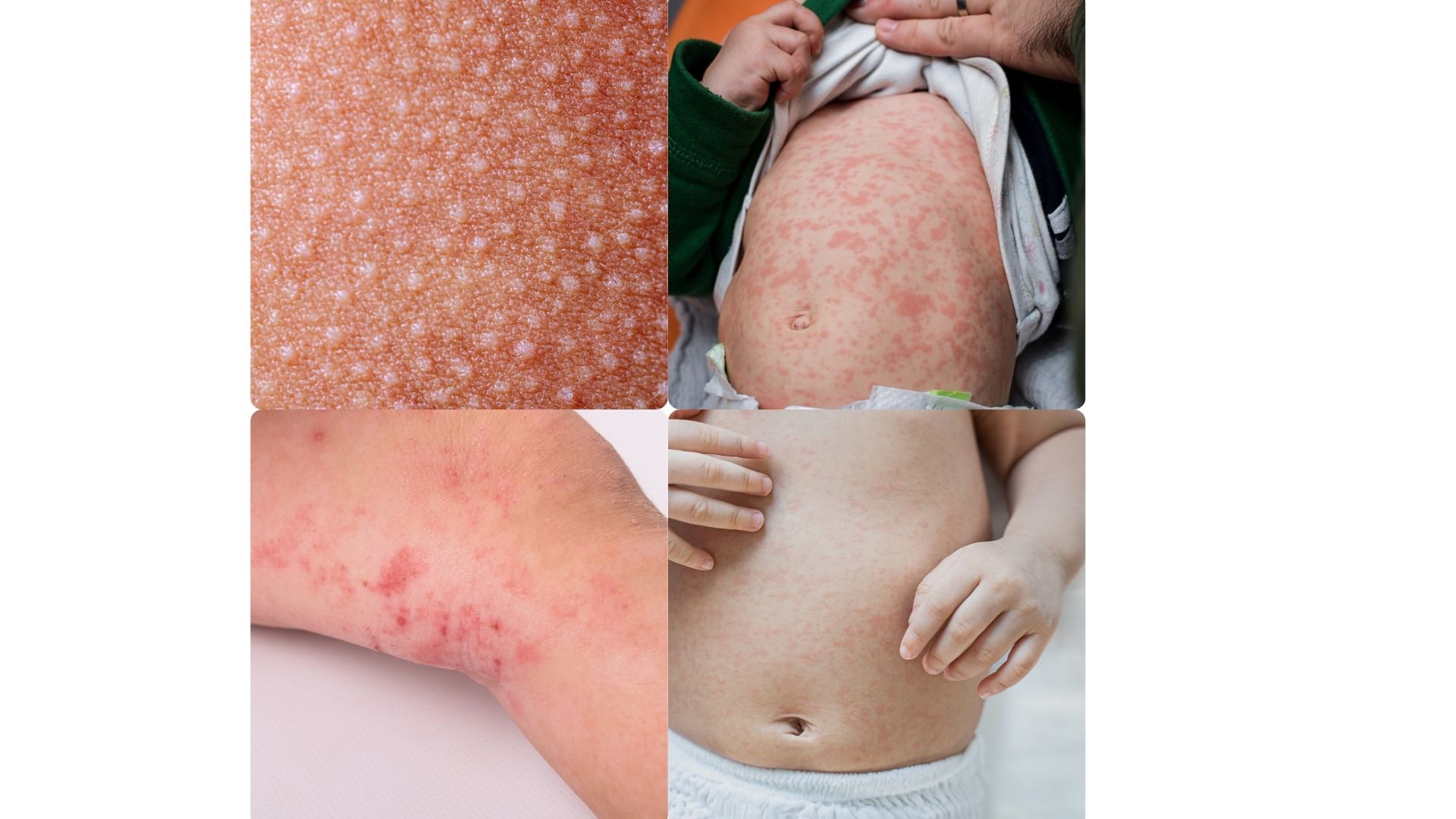
If you notice a new red, bumpy, dry, or blotchy area on your child's skin, there is no need to worry. Many parents observe skin rashes and frequently consult doctors. The good news is that most rashes in children are mild and go away on their own.A rash is a change in the skin that affects its colour, texture, or appearance, often causing redness, bumps, itching, or irritation. This is usually a sign that the skin is reacting to something.It can appear as;
- Redness or darkening of the skin
- Large or small bumps on the skin
- Rough patches
- Dry, scaly or peeling skin
- Tiny blisters that contain fluid [1]
You may also observe that your child keeps scratching these rashes or complains of a burning sensation on the skin. It may also appear to be sore.Rashes can develop in a small area, such as where a diaper is, or spread over the body. Some rashes go away quickly, while others last longer.
Why are rashes common in children?
- Their skin is still growing and is extra sensitive, so it dries out easily and gets irritated by everyday things like soaps, detergents, heat, sweat, certain fabrics, and even drool around the mouth during teething.
- Children are exposed to these skin irritants almost every day
- Rashes are common in babies because the diaper area stays warm and wet, and urine and faeces can quickly irritate the skin.
- Rashes caused by viruses, also known as exanthems, are common in daycare and early school years because children catch lots of viruses that can come with fever.
- Their immune system is still developing, and some children react more strongly to infections or irritants and get rashes more easily than others [2].
Common causes of rashes in children and how you can recognise them
It can be difficult to identify some skin rashes in dark-skinned children..
Skin rashes caused by a child's delicate skin and irritants
This is very common in infants, toddlers and young children. They include diaper rash (napkin dermatitis), heat rash and eczema (atopic dermatitis)
Diaper Rashes
Appears as redness or soreness in the diaper area. It can spread to the lower part of the belly and upper legs and is commonly caused by wetness and irritation from urine and faeces [3].
Heat rashes
They look like tiny bumps on the skin in areas that are covered and warm, such as the neck, chest, back and skin folds. This is common after sweating.
Eczema
This is a dry and itchy patch. If your child is light-skinned, the patches appear red. This kind of rash comes and goes over time. It is found on the cheeks and skin creases at the elbows, knees and neck.
Allergic skin rashes
Allergic rashes happen when a child's body reacts to something that is harmful. This could be food, medicine, insect stings, or irritants like soap, perfume, or plants. The body then releases chemicals such as histamine, which cause itching, redness, swelling, and bumps.Allergic skin rashes appear as Hives or Urticaria, Contact dermatitis and Eczema flare-ups.
Urticaria
These are itchy bumps that show up quickly. They move around as some go away and new ones appear
Contact Dermatitis
This is an itchy rash that happens when the skin touches something like lotion, detergent, jewellery, or plants that cause irritation.
Eczema
Flare-ups in children happen when they come into contact with things like strong soaps, heat, sweat, or allergens, causing itching and swelling.
Viral Rashes
Viral rashes or exanthems are common and occur when the immune system reacts to an infection by a virus. Many are mild and go away on their own. Viral rashes include Chicken Pox (Varicella), Fifth Disease (Erythema Infectiosum), Roseola, Measles, Molluscum Contagiosum, Pityriasis Rosea and Hand, Foot and Mouth Disease.To identify viral rashes, look at the pattern. Check if the fever or rash comes first, where the rash is on the body, and what the spots look like.
Chickenpox
Chickenpox is caused by the varicella-zoster virus and leads to an itchy rash that changes in appearance over time.It starts on the chest, back, or face and then spreads. The spots first appear as red bumps, then turn into blisters, and finally become scabs. A key sign is seeing bumps, blisters, and scabs all at the same time.
Hand, Foot, and Mouth Disease (HFMD)
The Hand, Foot, and Mouth Disease (HFMD) caused by coxsackievirus A16 usually affects children under 5 years old. It starts with a fever or sore throat. Then, sores appear in the mouth, which can cause drooling or make it hard for the child to eat. A rash shows up on the palms and feet as red spots or blisters. Sometimes, the rash spreads to the buttocks or legs.
Fifth Disease
The Fifth Disease is caused by parvovirus B19 and makes children's cheeks look very red, like they have been slapped. A lighter rash may appear on their arms, legs, or body.
Measles
Measles caused by the measles virus initially resembles a cold with fever, cough, runny nose, and red eyes before a rash appears. The rash begins on the face near the hairline, spreading to the neck, body, arms and legs.
Roseola
Roseola affects children under 2 years old. It is caused by Human Herpesvirus 6 and starts with a high fever. The child may feel uncomfortable, but looks normal. After the fever subsides, a rash appears. The rash starts on the body before spreading. This is common for roseola and resolves in days.
Molluscum Contagiosum
Molluscum Contagiosum, caused by the pox virus, appears as small, firm, pearly bumps with a dimple in the middle. The painless bumps often appear in groups on the trunk, arms, legs, armpits, or buttocks, but not on palms or soles. The condition spreads through close contact, and new bumps can appear slowly, particularly in children.
Pityriasis Rosea
Pityriasis Rosea is linked to the Human Herpes Virus and starts with a large oval "herald patch" resembling a ringworm. After 1-2 weeks, smaller oval spots appear on the chest, back, and stomach, sometimes on arms and legs. These spots form a "Christmas tree" pattern on the back. The condition may itch but resolves itself. Children usually feel fine.
Bacterial Skin Rashes
Bacterial skin rashes include Impetigo and Scarlet Fever.
Impetigo
You can recognise impetigo by how it looks. It starts as red sores that itch, then break open, and form a yellow crust that looks like honey. It usually shows up around the nose and mouth, or on arms and legs. It spreads easily through scratching and close contact, so it's important to see a doctor early.
Scarlet fever
This usually starts with a fever and sore throat caused by Group A Streptococcus (a group of bacteria). Then, a red rash that feels like sandpaper appears. The rash is brighter in skin folds like the armpits and elbows. This is a common sign.
Fungal and Parasitic Rashes
Fungal and parasitic rashes include Ringworm (Tinea) and Scabies.
Ringworm, or tinea
Ringworm rash is caused by a fungus and looks like a ring on the skin. It starts as an itchy spot and grows into a round or oval shape with a scaly edge. The middle is clearer than the edge. These patches appear on the face, scalp, arms, or body. This fungal infection spreads by touching infected people, animals, or shared items like combs and towels [2].
Scabies
Scabies is caused by an itch mite called Sarcoptes Scabei. It causes very itchy skin, especially at night. The rash looks like red bumps or tiny lines. It often shows up between fingers, on wrists, elbows, waist, and buttocks. Family members might also get itchy because it spreads through skin contact. It is important to treat everyone close to you and wash clothes properly to stop it from coming back .
10 Symptoms That Suggest Rashes in Children Are Serious
Most rashes are not serious and go away on their own. But some can be serious and need quick medical help. Here is a list of symptoms that show a rash is serious and needs medical attention.
- Breathing problems like fast breathing, wheezing, gasping, choking, or trouble breathing in.
- Sudden swelling of the lips, tongue, mouth, throat, or face
- Lips or skin looking blue, grey, or pale (for darker skin, check the palms or soles)
- A rash that looks purple or like bruises, or tiny red or purple spots that do not disappear when you press on them, especially if there is a fever or the child seems sick.
- If the child has a stiff neck, a bad headache, confusion, unusual drowsiness, or seizures
- If your child has a fever and a rash, and seems very sick, very sleepy, or cranky
- If a baby is under three months old, has a rash and a fever or is acting strangely, like not eating well or being very sleepy.
- A rash with blisters, open sores, oozing, or crusting, particularly if it is spreading.
- A rash that appears after the child was given a new medicine.
- Redness or pain in the eyes with a rash.
How to Treat Mild Rashes in Children at Home
Home care is suitable only for mild rashes.
- Keep the skin clean by washing it gently with warm water. Use a mild soap without any fragrance. Pat the skin dry instead of rubbing it.
- Use a mild, fragrance-free moisturiser often. It works best when it is applied right after a bath to keep the skin moist.
- To stop itching, put on calamine lotion. You can also use a cool cloth for 10–15 minutes to feel better.
- Keep nails short to reduce skin damage from scratching. For young children, using cotton mittens at night can help.
- Use basic barrier creams when needed. Zinc Oxide creams work well to protect irritated skin, especially in areas with skin folds.
- Watch the rash closely to see if it improves in the next few days. Look for changes in its colour, size, spread, or any new symptoms [4].
10 Ways to Prevent Rashes in Children
- Think of your child's skin as a protection. Hot water, scrubbing, or using scented products can irritate and dry it out. Keep baths short with warm water. Use your hands or a soft cloth to wash.
- Use mild, unscented soaps and lotions. Moisturise damp skin after bathing to keep it moist, especially for kids with dry skin or eczema.
- Diaper rash occurs when moisture and stool or urine remain on the skin for too long. To prevent this, change diapers often, especially after your baby passes faeces. Use a soft cloth to pat the skin dry [5].
- Rinse well and wash new clothes before you use them.
- Washing hands is very important. Teach kids to wash their hands with soap. Watch younger kids while they do it. They should wash after using the toilet and before eating. This helps stop germs from spreading.
- To prevent new rashes, avoid using new soaps, lotions, or cleaning products. Wear loose clothes on the child and be mindful in hot weather, particularly when your child sweats a lot.
- Clean things like toys and handles often, especially during sickness. Do not share personal items like towels, if there are rashes. Keep your child’s nails short and clean to prevent infections from scratching
- Vaccines protect children from serious diseases that cause rashes. They work by helping the body fight certain germs. The Measles, Mumps and Rubella vaccine prevents measles, which can start with cold-like symptoms and lead to a rash and other issues. The varicella vaccine reduces the risk of getting chickenpox, which causes itchy blisters.
- Insect bites cause itchy rashes in children, worsened by scratching. For older children, use child-safe repellents. For babies, use mosquito nets over cribs and dress in long-sleeved clothing when insects are active. These measures prevent bites and rashes.
- Avoid contact with infected people or pets. Wash your hands after touching animals if you think they have ringworm.
Conclusion
Rashes are common in children, occurring from heat, moisture, rubbing, infections, or new products. Check the rash location, appearance, fever presence, and child's condition to determine if it's from irritation, allergy, or infection needing treatment. Focus on gentle cleaning, avoiding harsh products, keeping skin dry, and maintaining vaccinations. Most mild rashes improve with basic care. Seek medical help for severe symptoms like breathing trouble, face swelling, purple non-fading rash, extreme sleepiness, or fast-spreading rashes. Good care and quick action help manage childhood rashes effectively.
References
Allmon A, Deane K, Martin KL. Common skin rashes in children. Am Fam Physician. 2015 Aug 1;92(3):211–6. Available from: https://pubmed.ncbi.nlm.nih.gov/26280141/
- Choi EH. Skin Barrier Function in Neonates and Infants. Allergy Asthma Immunol Res 2025; 17: 32–46. Available from: https://pubmed.ncbi.nlm.nih.gov/39895601/
- Negera A, Sento M, Dereje D, et al. Diaper dermatitis and associated factors among children aged 0–24 months in low- and middle-income countries: A systematic review protocol. PLoS ONE 2025; 20: e0313923. Available from: https://pubmed.ncbi.nlm.nih.gov/39787096/
- Schmitt Pediatric Care Advice. Emergency Symptoms Not to Miss. Pediatric Patient Education. Epub ahead of print 15 September 2025. DOI: 10.1542/ppe_schmitt_095. Available from: https://www.pediatricandadolescentmedicine.net/Emergency-Symptoms-Not-to-Miss
- Benitez Ojeda AB, Mendez MD. Diaper Dermatitis. In: StatPearls. Treasure Island (FL): StatPearls Publishing, Available from: http://www.ncbi.nlm.nih.gov/books/NBK559067/
Disclaimer:
The information provided on this website is for general educational and informational purposes only. It is not intended to replace professional medical advice, diagnosis, or treatment. Always seek the advice of your physician or other qualified health provider with any questions you may have regarding a medical condition.
Published January 21, 2025