Factors That Can Affect Your HbA1c Result
Author: Azibayam Okrinya, MBBS
Reviewer: Azuka Chinweokwu Ezeike, MBBS, FWACS, FMCOG, MSc (PH)
Highlights
- HbA1c test is a blood test that measures your average blood sugar level over the past 2 to 3 months.
- The HbA1c test is used to diagnose prediabetes and diabetes and monitor sugar control.
- Factors that can affect HbA1c results include anaemia, pregnancy, some medications, sickle cell disease, and kidney failure.
- When HbA1c is unreliable, other tests such as fructosamine, Glycated albumin, Continuous Glucose monitoring and plasma glucose tests can be used as alternatives.
Introduction
Say you went to the hospital to check your sugar level, and after seeing your result, the doctor asks you to do an HbA1c blood test, and you're wondering what HbA1c is and why the doctor requested it.
Haemoglobin A1c (HbA1c) is also known as glycated haemoglobin or glycosylated haemoglobin, or simply A1c. It shows your average sugar level over the past two to three months and can be used to diagnose diabetes or monitor how well your blood sugar is controlled [1].
The reason you were asked to do an HbA1c test may be because the doctor saw an abnormally high blood sugar level and wants to confirm whether it is a temporary thing or if it could be a sign of prediabetes or diabetes.
In this article, we will help you understand what HbA1c is, factors that may affect your HbA1c result, and what to do when your HbA1c result doesn't match your blood sugar readings.
What Is HbA1c?
Hb stands for haemoglobin, a protein in red blood cells that carries oxygen around the body. HbA1c is a type of haemoglobin that has sugar attached to it.
What is an HbA1c test?
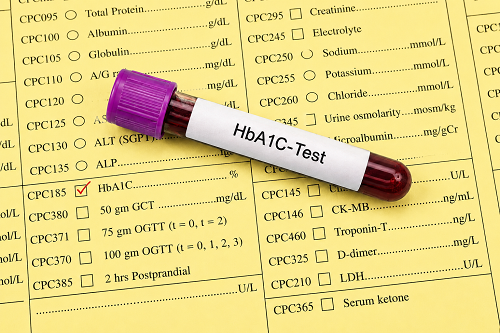
HbA1c test is a blood test that measures the percentage of haemoglobin with sugar attached.
According to the Centers for Disease Control (CDC), the HbA1c test is a simple blood test used to diagnose prediabetes and diabetes and monitor your progress.
What is HbA1c Used For?
Your HbA1c results can be used to:
- Diagnose prediabetes or diabetes.
- Give you and your healthcare provider an idea of your average blood sugar level over the last 2 to 3 months.
- Help you and your healthcare provider understand how well your treatment plan is working or if changes to it have helped you reach your HbA1c target.
How Do You Interpret HbA1c Results?
HbA1c test results are reported as a percentage (%). The higher the percentage, the higher your blood sugar levels have been over the past 2 to 3 months.
According to the American Diabetes Association (ADA);
- HbA1c of less than 5.7% is normal.
- HbA1c of 5.7% to 6.4% is Prediabetes.
- HbA1c of 6.5% or higher is Diabetes.
How Does HbA1c Help Assess Blood Sugar?
The HbA1c test assesses blood sugar by measuring the percentage of your red blood cells that have sugar attached to haemoglobin [2].
When sugar enters your bloodstream, it attaches to a protein in your red blood cells called haemoglobin [2].
Everyone has some sugar attached to their haemoglobin. However, when you have higher blood sugar levels, there is a higher number of haemoglobin molecules with sugar attached [2].
Because red blood cells live about 120 days and are constantly replaced, the HbA1c test provides your average blood sugar level over that time.
This helps you understand your sugar levels over a longer period compared with results from your blood glucose meter or a continuous glucose monitor [2].
What Factors Can Affect Your HbA1c Result?
HbA1c is an indirect measure of average blood sugar levels; some factors can affect your result. Some of them are discussed below.
Factors that can cause inaccurate or difficult-to-interpret results
- Haemoglobin variant:
Haemoglobin variants (abnormal haemoglobin) can make interpretation of HbA1C challenging by falsely increasing or decreasing the result.
This depends on the type of laboratory method used.
Generally, HbA1c is not reliable in people with homozygous haemoglobin variants (HbSS, HbCC and HbSC) as they do not have the A haemoglobin. However, HbA1c measurements can be used in patients with heterozygous haemoglobin variants (HbAS, HbAC) and increased HbF as long as the appropriate method is used [3].
- Race/Ethnicity:
Your HbA1c result may be affected if you are of African, Mediterranean, or Southeast Asian descent or have family members with sickle cell anaemia or a thalassemia. People in this group may have a different haemoglobin variant, which can interfere with their HbA1c results [3].
Factors that can falsely lower HbA1c
- Conditions that shorten red blood cell lifespan
- Haemolytic anaemia: Rapid breakdown of red blood cells shortens red blood cell lifespan, giving haemoglobin less time to attach to sugar, causing a falsely low HbA1c result [4].
- Blood loss can shorten the lifespan of the available red blood cells, resulting in falsely low HbA1c.
- Chronic kidney disease and kidney failure: Anaemia from kidney failure shortens red blood cell lifespan and causes low HbA1c levels [4]. Dialysis can also result in falsely low HbA1c results [4].
- Pregnancy: Changes in pregnancy in the second and third trimester cause a shortened lifespan of red blood cells, resulting in falsely low HbA1c results [5].
However, HbA1c is not recommended for diagnosing gestational diabetes.
- G6PD deficiency: this genetic disorder can cause anaemia, which can result in low HbA1c results [4].
- Drugs and treatments
- Erythropoietin used to help red blood cell production can reduce their lifespan, leading to falsely low HbA1c [4,5].
- Iron replacement therapy used to treat iron deficiency can also falsely lower HbA1c results [4].
- Some HIV drugs like zidovudine cause falsely low HbA1c results [5].
Factors that can falsely raise HbA1c
- People with Iron deficiency anaemia have increased levels of a compound which makes it easier for glucose to bind to red blood cells, leading to falsely high HbA1c results [4].
- Folate and vitamin B12 deficiency can indirectly prolong red blood cell lifespan, leading to falsely high HbA1c results.
- Asplenia (absence of the spleen) causes increased red blood cell lifespan, resulting in falsely high HbA1c results.
- Urea build-up in kidney failure results in the formation of a type of haemoglobin which can falsely increase HbA1c [5].
What Tests Can Be Used When HbA1c Is Not Reliable?
In a setting where haemoglobin variants, changes in red blood cell lifespan, or other factors interfere with HbA1c results, other methods or alternatives can be used.
- HbA1c methods for Haemoglobin variants
Different laboratory methods are available for measuring HbA1c, and some haemoglobin variants can interfere with certain methods and affect the accuracy of the result.
The National Glycohemoglobin Standardization Program (NGSP) provides information on which HbA1c testing methods are appropriate for people with specific haemoglobin variants.
Therefore, your healthcare provider needs to know the HbA1c testing method used by the laboratory, particularly if you have a known haemoglobin variant
Alternatives to Using HbA1C
- Fructosamine
Fructosamine measures the total protein (mostly albumin) coated with sugar [6].
Unlike HbA1c, it is not dependent on the level or lifespan of the red blood cells.
It can be used to measure sugar control in people who have conditions that affect the red blood cells (eg sickle cell disease, anaemia, iron deficiency, etc.).
It reflects your average sugar level over the last 2-4 weeks [6].
- Glycated albumin
Glycated albumin is like fructosamine. However, it is more specific in that it measures only total albumin that is sugar-coated [6].
It also reflects your average sugar level over the last 2-4 weeks.
- Continuous glucose monitoring (CGM)
Continuous glucose monitoring (CGM) is a direct measure of sugar control in diabetics and is recommended when an HbA1c result is unreliable.
It measures sugar levels directly by using a monitor that tracks your sugar level in real time, 24 hours a day.
When used with Time in Range (TIR), which measures the time your sugar stays within a target window, it matches directly with HbA1c, allowing your healthcare provider to estimate your sugar control [6].
It is a ten- to fourteen-day assessment, with the monitor being worn at least 70% of the time [6].
- Plasma blood glucose tests
According to the American Diabetes Association (ADA), plasma blood glucose criteria are used to diagnose diabetes in conditions that alter HbA1c results. The plasma blood glucose tests include:
- Fasting Plasma Glucose (FPG)
- Oral glucose tolerance test (OGTT)
- Random blood Glucose ( RBG)
What Should You Do If Your HbA1c Does Not Match Your Blood Sugar Readings?
In some people, a blood sugar test may show that they have diabetes when an HbA1c does not. The reverse can also happen, and the HbA1c may indicate diabetes even if your blood sugar test does not [7].
These differences may occur in the early stages of diabetes, when blood sugar levels have not risen high enough to show up on every test [7].
Because of these differences, your doctor may ask you to repeat the test before making a diagnosis. Simultaneously using different methods of analysis improves accuracy [8]. If the mismatch between the HbA1c and blood sugar is due to the factors mentioned above, the doctor may request alternative tests.
When Should You Speak to Your Healthcare Provider About Your HbA1c?
You should see your healthcare provider:
- If you do not have diabetes and your HbA1c result is above normal.
- If you are a diabetic on treatment and your HbA1c isn’t controlled.
- If you are in the first trimester of your pregnancy and your result is above normal.
- If your HbA1c result remains high after delivery.
Conclusion
HbA1c is one of the most reliable tests for diagnosing prediabetes and diabetes, and assessing average blood sugar control.
However, some individual factors can affect its reliability. In these cases, your healthcare provider may recommend other alternatives.
Frequently Asked Questions (FAQs)
Can HbA1c Results Be Affected by Other Factors?
Yes, HbA1c measures your average blood sugar over the last two to three months; however, certain conditions like low blood levels (anaemia), sickle cell disease, pregnancy, and kidney failure can affect your result.
How Can You Tell If Your HbA1c Result May Not Be Reliable?
Your HbA1c result may not be reliable if it doesn’t match your blood sugar reading or symptoms, e.g., if your blood sugar reading is consistently high and your HbA1c result is normal and vice versa.
What HbA1c Target is Good for Someone with Diabetes?
For most people living with diabetes, an HbA1c of 7% or less is the recommended target.
Do I Need to Prepare for an HbA1c Test?
No, you do not need to. Unlike some other glucose tests, you don't need to fast before having your blood taken for the test.
References
- Eyth E, Zubair M, Naik R. Haemoglobin A1C [Internet]. PubMed. StatPearls Publishing; 2025 [cited 2026 Sept 1]. Available from: https://www.ncbi.nlm.nih.gov/books/NBK549816/
- American Diabetes Association. Understanding A1C [Internet]. 2023 [cited 2026 Sept 1]. Available from: https://diabetes.org/about-diabetes/a1c
- Sickle cell trait & other hemoglobinopathies & diabetes (for providers) | NIDDK [Internet]. National Institute of Diabetes and Digestive and Kidney Diseases. 2020 [cited 2026 Sept 12]. Available from: https://www.niddk.nih.gov/health-information/professionals/clinical-tools-patient-management/diabetes/sickle-cell-trait-hemoglobinopathies-diabetes
- NGSP (National Glycohemoglobin Standardization Program): Factors that interfere with HbA1c test results [Internet]. ngsp.org. 2025 [cited 2026 Sept 2]. Available from: https://ngsp.org/factors.asp
- Bajaj M, McCoy RG, Balapattabi K, Bannuru RR, Bellini NJ, Bennett AK, et al. 2. Diagnosis and classification of diabetes: Standards of care in diabetes—2026. Diabetes Care [Internet]. 2025 Dec 8 [cited 2026 Sept 11];49(Supplement_1):S27–49. Available from: https://diabetesjournals.org/care/article/49/Supplement_1/S27/163926/2-Diagnosis-and-Classification-of-Diabetes
- Bajaj M, McCoy RG, Balapattabi K, Bannuru RR, Bellini NJ, Bennett AK, et al. 6. Glycemic goals, hypoglycemia, and hyperglycemic crises: Standards of care in diabetes—2026. Diabetes Care [Internet]. 2025 Dec 8 [cited 2026 Sept 3];49(Supplement_1):S132–49. Available from: https://diabetesjournals.org/care/article/49/Supplement_1/S132/163927/6-Glycemic-Goals-Hypoglycemia-and-Hyperglycemic
- The A1C test & diabetes [Internet]. National Institute of Diabetes and Digestive and Kidney Diseases. 2018 [cited 2026 Sept 3]. Available from: https://www.niddk.nih.gov/health-information/diagnostic-tests/a1c-test
- Li G, Xu H, Qian Y, Bao G. A Case of Pseudoelevation of Glycosylated Hemoglobin. Clin Lab. 2025;71(01/2025). doi:10.7754/Clin.Lab.2024.240808 . Available from: https://www.clin-lab-publications.com/article/5098
Disclaimer:
The information provided on this website is for general educational and informational purposes only. It is not intended to replace professional medical advice, diagnosis, or treatment. Always seek the advice of your physician or other qualified health provider with any questions you may have regarding a medical condition.
Published September 14, 2026