Complete Blood Count (CBC): What It Checks and What Your Results Mean
Author: Vera Ubabuike, MBBS
Medical Reviewer: Azuka Chinweokwu Ezeike, MBBS, FWACS, FMCOG, MSc (PH)
Highlights
- A complete blood count (CBC) is a very common blood test that gives information about all your blood cells.
- It can be used for a routine health check, to diagnose certain illnesses, or to monitor the effect of a medication or the progress of a disease.
- The complete blood count measures the numbers and sizes of the blood cells such as: the red cells, the white cells, and the platelets.
- A complete blood count can help diagnose illnesses such as anaemia, infection, cancer, allergies, and immune diseases.
- The normal range for the parameters in the complete blood count can differ depending on the age and sex of the individual, and also the lab where the test is done.
Introduction
What Is a Complete Blood Count (CBC)?
A complete blood count is one of the most common blood tests done at the hospital. Your complete blood count result gives information about all your blood cells. It shows the total number of each cell type, and it also gives information about your immune system and the oxygen-carrying capacity of your blood.
A complete blood count result can be used to diagnose illnesses such as anaemia, infection, or cancer. It can also be used to monitor illness over time and to monitor treatments [1].
This article explains what a complete blood count is, why it is done, and what it measures. It also gives information on how to prepare for a complete blood count and what your results may mean.
Why Is a Complete Blood Count Done?
There are several reasons why your doctor may request that you have a complete blood count done. Some of them include:
- To evaluate your overall health status
- To aid the diagnosis of certain diseases such as anaemia, cancers, infections, allergies, immune system diseases, etc.
- To monitor the effect of medications like chemotherapy, immunosuppressants, etc.
- To monitor the progress of some diseases like chronic kidney disease, cancers, etc.
- To assess medical fitness in legal or official situations like employment, surgery, military recruitment, etc [1].
What Does a Complete Blood Count Measure?
To understand the complete blood count, you must know that your blood is made up of three (3) major cell types, along with the fluid that carries the cells (i.e., plasma). These cell types are:
- Red blood cells
- White blood cells
- Platelets [2]
A complete blood count is a test that measures several parameters in your blood. It tells us the numbers, sizes, and variety of your blood cells.These parameters are [3]:
Red blood cell count
Red blood cells (RBC) are the cells responsible for carrying oxygen to all the parts of your body. Red blood cell count refers to the number of red blood cells seen in a volume of blood, usually a microlitre.
Haematocrit (Hct)
This is the percentage of your blood that consists of red blood cells. Haematocrit gives an idea of the amount of your blood that is made up of red blood cells.
Haemoglobin level (Hb)
Haemoglobin is the protein in your red blood cells which is actually responsible for carrying oxygen to different parts of your body. Haemoglobin level measures the amount of haemoglobin in your blood.
Red cell indices
This tells us about the different sizes of your red blood cells and the amount of haemoglobin they contain. The parameters measured here are:
- Mean corpuscular volume (MCV)
- Mean corpuscular haemoglobin (MCH)
- Mean corpuscular haemoglobin concentration (MCHC)
- Red cell distribution width(RDW)
These values can give us an idea of what may be causing a low red cell count or low haemoglobin levels.
Platelet count (Plt)
Platelets are the cells in your blood that help to stop excessive bleeding when you have a cut or an injury. Platelet count is the number of platelets per microlitre of blood.
White blood cell count
White blood cells (WBC) are the cells responsible for fighting infections and responding to any harmful organisms that may enter your body. The white blood cell count gives the number of white blood cells in each microlitre of blood.
White blood cell differentials
White blood cells are of different types. Each type has a different function in your body, and they are present in different proportions. These cells are:
- Neutrophils - They are important in bacterial infections, where they may increase in number.
- Lymphocytes - These cells are part of your body’s response to viral infections and some bacterial infections.
- Monocytes - These cells destroy bacteria and other microbes. They also alert other blood cells about microbes in the body.
- Basophils - These cells help your body to fight parasites and control allergic reactions.
- Eosinophils - They also fight parasites in the body and are increased in parasitic infestations or allergic reactions.
The white blood cell differential gives the number and percentage of each white cell type. It can give an idea of the type of infection your body is fighting.
How to Prepare for a Complete Blood Count
Here are some ways you can prepare for your complete blood count test:
- Stay well-hydrated by drinking enough water
- Wear clothes that make your arms easily accessible
- Avoid vigorous exercise right before your blood is taken, as this can alter your results
- Fasting for 8 to 12 hours before the test is recommended, as some test parameters may be altered by high blood glucose[4]
You can also ask your healthcare provider for any special instructions, as they may have some other recommendations if they want to have other tests carried out at the same time.
What Happens During a Complete Blood Count?
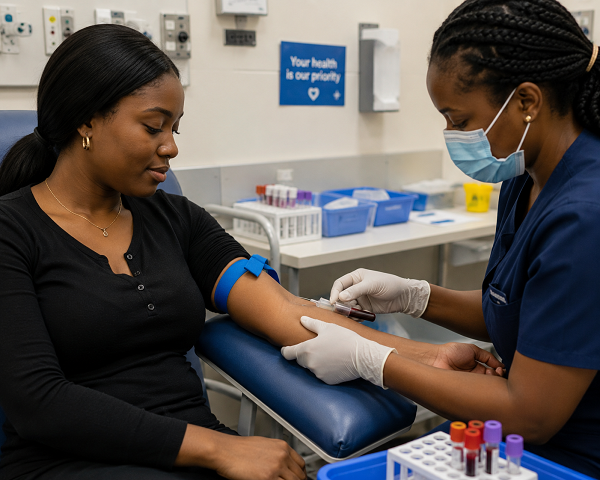
Getting your blood drawn for a complete blood count is very similar to any other blood draw. It is a simple procedure that takes about 10 to 15 minutes.
- You are asked to sit and rest for a few minutes
- The phlebotomist prepares all the materials needed for the procedure, such as: gloves, spirit swab, needle and syringe, dry swab, tourniquet, and a blood collection tube
- The phlebotomist will apply a tourniquet close to the area from which the blood will be taken
- A spirit swab will then be used to clean the area to be used for the blood draw
- The needle & syringe will be used to draw your blood.
- The blood collection tube is filled up to the fill line indicated on it. This allows a proper ratio of blood to anticoagulant (the substance that stops the blood from clotting in the tube) [4]
- The tourniquet will be taken off, and dry cotton wool will be used to apply pressure to the area to stop the bleeding
- The blood will be taken to the lab for the test
Understanding Complete Blood Count Results
The normal range for the parameters in a CBC can vary depending on different factors. Some of these are[5]:
- Age - some values are different for children and adults
- Gender - some values differ between men and women
- Pregnancy status - pregnant women often have different values from non-pregnant women
- Labs - every lab has its normal range, and they may differ slightly
- Race - Black people have been shown to have lower haemoglobin levels and lower platelet counts than white people
- Altitude - some values may differ based on where an individual lives, eg., Hct may be higher for people who live in mountainous areas.
Table 1: Normal ranges for complete blood count parameters [5]
What does an abnormal complete blood count mean?
An abnormal complete blood count can point to different health conditions. The different blood cell types are affected by different conditions. Hence, low or high cell count may point to different illnesses [6].
- High red cell count - This may be a result of lung diseases, heart conditions, sleep apnoea, kidney tumours, etc.
- Low red cell count (anaemia) - Some causes of this include: nutritional deficiencies, blood loss, kidney disease, worm infestation, etc.
- High white cell count - Causes include infection, leukaemia, lymphoma, allergies, post-surgery, burns, etc.
- Low white cell count - Causes include severe infection, medications, bone marrow disorders, etc.
- High platelet count - Causes include bone marrow disorders, infections, cancers, etc.
- Low platelet count - Can be caused by cancers, bone marrow disorders, platelet diseases, infections, drugs, disorders of sleep, etc.
When Should You See a Doctor About Your CBC Results?
You should see your doctor about your CBC results if you notice that your CBC results are outside the normal range for your age and/or gender. You should also ensure that a doctor reviews your CBC results if you previously had an abnormal result and went for a retest.
Conclusion
A complete blood count is a very common test used in medicine for health checks, diagnosis of illnesses, and monitoring of illnesses. Your complete blood count results can tell your doctor a lot about your health status, and it can help your doctor diagnose some illnesses early. Your knowledge of the complete blood count test will help you better understand the state of your health and your doctor’s recommendations.
Frequently Asked Questions (FAQs)
How long do I need to wait before I get my complete blood count results?
Depending on the lab you visit and the machine they use, your complete blood count may take about an hour or more to be carried out.
How often do I need to do a complete blood count test?
This depends on the reason for which it is done. Healthy individuals might need a complete blood count only once a year, while those being monitored for an illness may need it more frequently.
Are there risks or side effects of a complete blood count?
There are no risks or side effects specific to a complete blood count. There may be some effects of having your blood drawn, such as pain, bleeding, swelling of the area, etc.
References
- Igwe MC, Obeagu EI, Kalyankolo Z, Nwankpa CC, Kagenderezo BP, Obeagu GU. Efficiency of full blood count in routine patient diagnosis: a systematic review. International Journal of Innovative and Applied Research. 2022;10(8):12-18. Available from: https://www.journalijiar.com/uploads/IJIAR-2413.pdf
- Dean L. Blood and the cells it contains. In: Blood Groups and Red Cell Antigens [Internet]. Bethesda (MD): National Center for Biotechnology Information (US); 2005 [cited 2026 Aug 6]. Available from: https://www.ncbi.nlm.nih.gov/books/NBK2263/
- Almuthaybiri AR, Bawazir AAB, Almutairi FAM, Almutairi AA, Faqeehi MH, Al-Harbi TFM. Complete blood count (CBC) interpretation and analysis: a comprehensive review for medical laboratory professionals. J Posthumanism. 2025;5(1):1683-1699. doi:10.63332/joph.v5i1.3144. Available from: Complete blood count interpretation
- Turkish Biochemical Society Preanalytical Phase Working Group. Guideline for complete blood count in medical laboratories: effects of preanalytical parameters [Internet]. Ankara (TR): Turkish Biochemical Society; 2020 [cited 2026 Aug 6]. Available from: https://www.eflm.eu/upload/docs/Turkey-2021-Blood-Count.pdf
- Tefferi A, Hanson CA, Inwards DJ. How to interpret and pursue an abnormal complete blood cell count in adults. Mayo Clin Proc. 2005 Jul;80(7):923-936. doi:10.4065/80.7.923. Available from: https://www.sciencedirect.com/science/article/pii/S0025619611615681
- Leach M. Interpretation of the full blood count in systemic disease: a guide for the physician. J R Coll Physicians Edinb. 2014;44(1):36-41. doi:10.4997/JRCPE.2014.109. Available from: https://www.thebloodproject.com/wp-content/uploads/2022/07/CBC_2.pdf?utm_source=chatgpt.com
Disclaimer:
The information provided on this website is for general educational and informational purposes only. It is not intended to replace professional medical advice, diagnosis, or treatment. Always seek the advice of your physician or other qualified health provider with any questions you may have regarding a medical condition.
Published August 8, 2026