Arrhythmia: Causes, Symptoms, Diagnosis, Treatment
Medical Writer: Azuka Chinweokwu Ezeike, MBBS, FWACS, FMCOG, MSc (PH)
Highlights
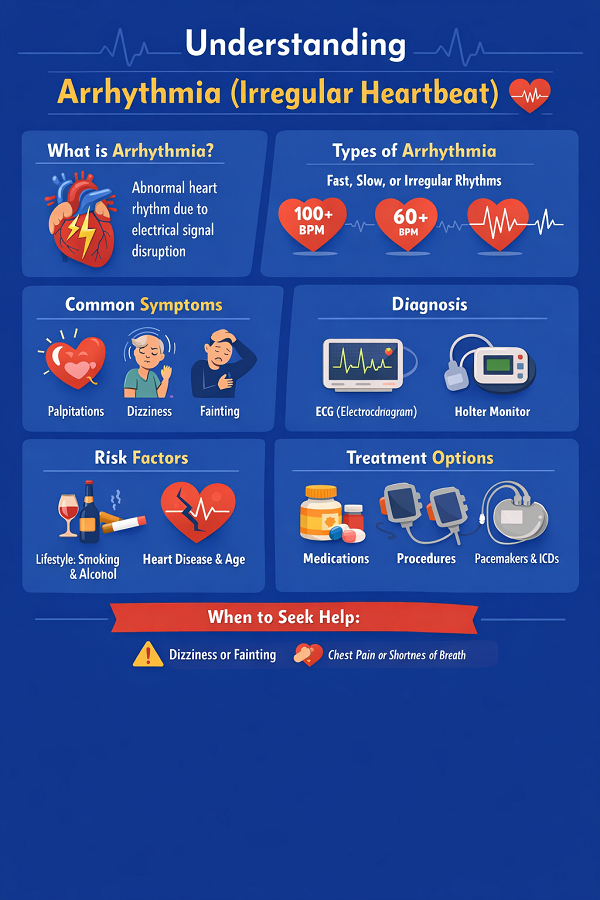
- Arrhythmia is a disorder of the heart’s electrical system that causes abnormal heart rhythms.
- It can present as a fast, slow, or irregular heartbeat.
- Some arrhythmias are harmless, while others can be life-threatening.
- Common symptoms include palpitations, dizziness, and fainting.
- Diagnosis often involves ECG, Holter monitoring, and imaging tests.
- Treatment ranges from lifestyle changes to medications and advanced procedures.
Introduction
Have you ever felt your heart suddenly race, pound, or flutter, only for it to return to normal moments later?It can feel unsettling, almost as if you have lost control of your own body.What is happening in that moment is a disruption in the electrical signals that control your heartbeat. This condition is known as arrhythmia.
Arrhythmia is a disorder of the heart’s electrical system that causes an abnormal heart rhythm [1]. Instead of the normal, steady pattern known as sinus rhythm, the heart may beat too fast, too slow, or irregularly.
While some people experience no symptoms at all, others may develop serious or even life-threatening complications.In this article, you will learn the causes, types, symptoms, diagnosis, and treatment of arrhythmia, along with practical steps to stay safe.
How Does Arrhythmia Occur?
To understand arrhythmia, it helps to know how a healthy heart works.Your heart has a natural pacemaker and an organised electrical system:
- The SA Node (Natural Pacemaker): Located in the right upper chamber, it generates electrical signals that trigger each heartbeat.
- Electrical Pathway: The signal travels from the upper chambers (atria) to the lower chambers (ventricles), ensuring a coordinated and efficient heartbeat.
Arrhythmia occurs when this system is disrupted, causing the heart to beat abnormally
Types of Arrhythmias
Arrhythmias are classified based on how fast your heart beats and where the rhythm problem starts in your heart [1].
The Two Main Categories
The most common way doctors group these conditions is by heart rate:
Tachyarrhythmia:
This is when your heart beats too fast, meaning your heart rate is higher than 100 beats per minute.
Bradyarrhythmia:
This is when your heart beats too slowly, meaning your heart rate is fewer than 60 beats per minute.
Tachyarrhythmias
These are further divided into:
- Supraventricular: When they start in the upper chambers of your heart
- Ventricular: When they start in the lower chambers
Supraventricular Tachycardias
The two major types are:
- Atrial Fibrillation (AFib): This is the most common type of arrhythmia. Your heart beats in an "irregularly irregular" way because of chaotic electrical signals in the upper chambers. It can be occasional (paroxysmal) or permanent.
- Atrial Flutter: This is similar to AFib, but the rhythm is usually more organised.
Ventricular Tachycardias
These are often more serious because the lower chambers do the main pumping work for your body.
- Ventricular Tachycardia (VT): This is a fast, regular rhythm that can be life-threatening if it lasts a long time.
- Ventricular Fibrillation (V-fib): This is a medical emergency. Your heart's lower chambers quiver instead of pumping, which can lead to sudden death if not treated immediately with a shock.
Bradyarrhythmias
These occur when the "natural pacemaker" of your heart fails, or the signal gets blocked on its way to the lower chambers [1, 2].
- Sinus Bradycardia: Your heart’s natural pacemaker simply sends signals too slowly. This is sometimes normal for very fit athletes.
- Atrioventricular (AV) Blocks: The electrical signal is delayed or completely blocked as it moves from the top to the bottom of your heart.
- First-degree block: A simple delay that usually does not need treatment.
- Second-degree block: Some signals are dropped, which might make you feel dizzy.
- Third-degree (complete) block: No signals get through at all. This is a serious condition that usually requires a pacemaker.
- Sinus Node Dysfunction: This happens when your heart's natural pacemaker becomes "tired" or damaged and fails to send signals consistently.
Common Symptoms of Arrhythmia
While some people have no symptoms and only find out they have an arrhythmia during a routine check-up, others may experience symptoms such as :
- Palpitations: A feeling like your heart is fluttering, racing, or skipping a beat.
- Dizziness or Lightheadedness: Feeling like you might faint.
- Fainting (Syncope): A sudden loss of consciousness.
- Chest Discomfort: Pain or pressure in the chest area.
- Shortness of Breath: Difficulty breathing, especially during activity.
- Fatigue: Feeling unusually tired or weak.
- Anxiety: A general feeling of unease or nervousness
Causes and Risk Factors for Arrhythmia
Many different factors can cause or trigger an irregular heartbeat: [2-5)
- Lifestyle Factors: Excessive alcohol use, recreational drugs, or a sedentary lifestyle
- Heart Conditions: Underlying issues like coronary artery disease, heart failure, or structural problems with the heart.
- Medical Issues: High blood pressure (hypertension), diabetes, obesity, and chronic lung disease
- Chemical Imbalances: Having too little potassium or magnesium in your blood. These substances in the blood, called electrolytes, help trigger and send electrical signals in the heart
- Age: The risk of developing an arrhythmia increases as you get older
- Other Triggers: Viral infections (like COVID-19), certain medications, and even caffeine or other stimulants
- Thyroid Gland Problems
When Should You Be Concerned?
It is important to seek medical advice if you notice any of the following: [1,2]
- Persistent Symptoms: If you regularly feel palpitations, dizziness, chest discomfort, shortness of breath, or unexplained fatigue.
- Fainting (Syncope): Any sudden loss of consciousness should be evaluated by a professional.
- Incidental Findings: Sometimes an irregular rhythm is found during a routine physical or a test for a different problem; these should be followed up on, even if you feel fine.
- Athletic Screening: Athletes, especially those in high-intensity training, should have cardiovascular evaluations to identify potential risks.
How Is Arrhythmia Diagnosed?
Clinical Assessment
Your doctor will take a detailed history and perform a physical examination.
Tests
Based on the findings, your doctor may request some tests. These include:[1, 2]
- Electrocardiogram (ECG): This is usually the first test; it records the heart's electrical activity to detect abnormal rhythms.
- Holter Monitoring: A portable ECG that you wear for 24 to 48 hours to capture irregular rhythms that do not occur all the time.
- Event Recorders: Similar to a Holter monitor, but you only turn it on when you actually feel symptoms like palpitations or dizziness.
- Electrophysiological (EP) Studies: Your doctor inserts thin tubes (catheters) into the heart to check its electrical activity and identify the exact spot causing the problem.
- Imaging Tests:
- Echocardiograms (ultrasound of the heart)
- Cardiac Magnetic Resonance Imaging (MRIs): These help doctors see the heart's structure and check for underlying conditions.
How is Arrhythmia Treated?
Everyone with an arrhythmia may not need treatment. Management depends on the type and severity of the condition [1]. Your doctor will determine what is best for you after evaluation.
Options include:
Lifestyle Changes
These include:
- Exercise
- Adequate diet
- Sleeping for at least 7 hours per day
- Avoiding smoking
- Maintaining a healthy weight
- Minimising stress
Medications
- Rate control: Drugs like beta-blockers help slow down a heart that is beating too fast, e.g., atenolol
- Rhythm control: Antiarrhythmic drugs help restore and maintain a normal, steady rhythm, e.g., lidocaine, amiodarone, diltiazem
- Blood thinners: Medications like aspirin may be needed to prevent stroke [2[
Procedures
- Electrical Cardioversion: Using a controlled electric shock to "reset" the heart rhythm
- Catheter Ablation: Your doctor uses heat or cold energy to destroy the tiny area of heart tissue that is causing the abnormal electrical signals
Implantable Devices
These are devices inserted (implanted) into the heart .
- Pacemakers: Pacemakers are small devices that help the heart maintain a steady rate if it beats too slowly
- Defibrillators: Devices that monitor for life-threatening fast rhythms and deliver a shock to reset the heart if needed
Newer Options
Some newer treatments have been developed, and they include: [1]
- Leadless pacemakers (which do not require wires in the veins)
- Gene therapy to fix the genetic causes of arrhythmia
Long-term Risks of Arrhythmias
If left untreated, certain arrhythmias can lead to serious, life-threatening complications:
- Stroke: Atrial fibrillation (AF) makes you five times more likely to have a stroke because blood can pool and form clots.
- Heart Failure: Over time, an irregular rhythm can weaken you heart muscle, making it unable to pump blood effectively.
- Sudden Cardiac Death: Very dangerous rhythms in the lower chambers (ventricular fibrillation) can cause the heart to stop beating entirely, leading to sudden death if not treated immediately
A study conducted in the USA showed a higher risk of death in males compared to females, and that White individuals were more affected than other racial groups [6].
Living With Arrhythmia
Managing your daily life with an arrhythmia requires attention to your safety and maintaining your quality of life. You also need to learn how to manage the devices:
- Device Management: You may live with implanted devices like pacemakers and defibrillators that monitor your heart rhythm and deliver treatment automatically. You need to understand and follow the necessary precautions while using these devices.
- Wearable Technology: If you are a high-risk patient, you may use a wearable defibrillator (like a vest) for temporary protection while waiting for more permanent treatment.
- Remote Monitoring: You may also be asked to use other devices to allow doctors to keep track of your heart rhythm from your home.
Prevention Tips for Arrhythmia
While some arrhythmias are genetic or age-related, you can reduce your risk by managing lifestyle and health factors:
- Manage Chronic Conditions: Keep blood pressure, diabetes, and coronary artery disease under control.
- Heart-Healthy Lifestyle: Avoid a sedentary lifestyle by staying physically active and maintaining a healthy weight to prevent obesity.
- Limit Triggers: Reduce or avoid excessive alcohol use and recreational drugs.
- Electrolyte Balance: Ensure you are getting enough essential minerals, particularly potassium and magnesium.
- Genetic Awareness: In the future, genetic testing may help identify if you are at high risk for certain inherited arrhythmias, allowing for early preventive measures
WATCH THE EXPLAINER VIDEO HERE
Conclusion
Arrhythmia is more common than many people realise, and it can range from harmless to life-threatening. The key is awareness. If your heart ever feels like it is “out of rhythm,” do not ignore it. Your body may be trying to tell you something important.
Understanding your symptoms, knowing when to seek help, and managing risk factors can make a significant difference. With early diagnosis and appropriate treatment, most people with arrhythmia can live full and healthy lives.
Frequently Asked Questions (FAQs)
Is arrhythmia life-threatening?
Some types are harmless, but others, like ventricular fibrillation, can be fatal if untreated.
Can emotional stress cause arrhythmia?
Yes, especially in people with underlying heart conditions
Can young people have arrhythmia?
Yes. Although more common in older adults, it can occur in young people and children.
References
- Nagpal AK, Pundkar A, Singh A, Gadkari C. Cardiac Arrhythmias and Their Management: An In-Depth Review of Current Practices and Emerging Therapies. Cureus. 2024 16(8):e66549. doi:10.7759/cureus.66549 PubMed PMID: 39252710; PubMed Central PMCID: PMC11381938. Available from: https://pmc.ncbi.nlm.nih.gov/articles/PMC11381938/
- Desai DS, Hajouli S. Arrhythmias. In: StatPearls [Internet]. Treasure Island (FL): StatPearls Publishing; 2026 [cited 2026 Apr 9]. Available from: http://www.ncbi.nlm.nih.gov/books/NBK558923/ PubMed PMID: 32644349.
- Boskabadi AR, Poorzand H, Vaezi A, Afshar S, Tayyebi M, Morovatdar N. Increased Arrhythmia Risk in Long COVID: A Systematic Review and Meta‐Analysis. J Arrhythm. 2026 Feb 9;42(1):e70278. doi:10.1002/joa3.70278 PubMed PMID: 41675585; PubMed Central PMCID: PMC12887432. Available from: https://pubmed.ncbi.nlm.nih.gov/41675585/
- Buckley U, Shivkumar K. Stress-induced cardiac arrhythmias: The heart–brain interaction. Trends Cardiovasc Med. 2016 Jan;26(1):78–80. doi:10.1016/j.tcm.2015.05.001 PubMed PMID: 26051207; PubMed Central PMCID: PMC4662914. Available from: https://pubmed.ncbi.nlm.nih.gov/26051207/
- Fabritz L, Hatem SN, Sossalla S. Arrhythmia-induced cardiomyopathy: focus on atrial fibrillation. Nat Rev Cardiol. 2026 Mar;23(3):197–207. doi:10.1038/s41569-025-01195-2 PubMed PMID: 40954334. Available from: https://pubmed.ncbi.nlm.nih.gov/40954334/
- Azeem B, Khurram L, Sharaf B, Khan A, Habiba A, Asim R, et al. Unmasking Arrhythmia Mortality: A 25‐Year Analysis of Trends and Disparities in the United States (1999–2023). Clin Cardiol. 2025 Mar 4;48(3):e70109. doi:10.1002/clc.70109 PubMed PMID: 40035357; PubMed Central PMCID: PMC11877330 Avaiable from: https://pmc.ncbi.nlm.nih.gov/articles/PMC11877330/
Disclaimer:
The information provided on this website is for general educational and informational purposes only. It is not intended to replace professional medical advice, diagnosis, or treatment. Always seek the advice of your physician or other qualified health provider with any questions you may have regarding a medical condition.
Published April 13, 2026