7 Urinary Symptoms Men Should Not Ignore
Medical Writer: Rachel Njuguna Dip (Medical Laboratory Science)
Medical Reviewer: Azuka Chinweokwu Ezeike, MBBS, FWACS, FMCOG, MSc (PH)
Highlights
- Persistent urinary symptoms may signal underlying prostate or urinary tract problems
- Frequent nighttime urination is not always a normal part of ageing
- Blood in the urine should always be medically evaluated
- Burning during urination may indicate infection or inflammation
- Weak urine flow and dribbling can result from urinary obstruction
- Several urinary symptoms are commonly linked to prostate enlargement
- Doctors use urine tests, blood tests, scans, and physical examinations to identify the cause
- Treatment depends on the underlying condition and severity of symptoms
- Early diagnosis and treatment can help prevent complications
Introduction
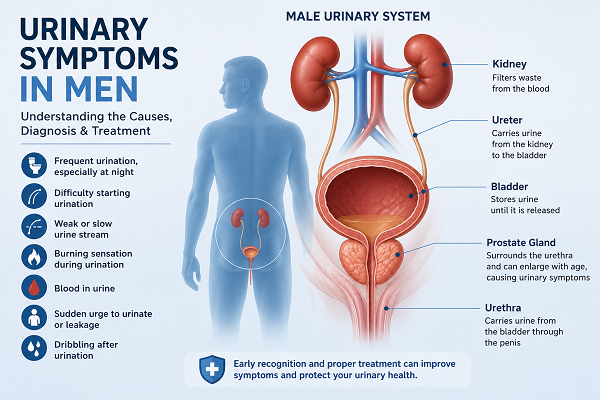
Men experience urinary problems at some point in their lives, especially as they grow older. These changes may begin slowly and seem harmless at first. Some men may notice they are waking up more often at night to urinate, taking longer to start urinating, or feeling that the bladder does not empty properly. Others may experience burning during urination, a weak urine stream, urgency, dribbling, or even blood in the urine.
Because these symptoms are common, many people assume they are simply part of ageing. However, this is not always true. Urinary symptoms can sometimes be linked to underlying medical conditions affecting the prostate, bladder, kidneys, or urinary tract. Infections, prostate enlargement, kidney stones, bladder problems, and other health conditions may all cause changes in urination.
Some conditions are mild and treatable. However, persistent, worsening, or unusual symptoms should never be ignored, especially when they begin affecting sleep, comfort, or daily activities.
This article discusses seven urinary symptoms that men should not ignore. It explains what these symptoms may mean, when the prostate may be involved, how doctors diagnose urinary problems, and the available treatment options.
Understanding these warning signs can help men seek medical care early and protect their long-term urinary health
Frequent Urination
Frequent urination is the need to pee more often than usual. Some men feel the need to go every one to two hours during the day. If you are going eight or more times in 24 hours, that is considered frequent [1].
Frequent urination is a symptom of various conditions, ranging from temporary and mild to serious and long-lasting (chronic). In many cases, a healthcare provider can help relieve frequent urination by treating the cause (underlying condition).
The most common cause of frequent urination in men is an enlarged prostate. This can be due to Benign Prostatic Hyperplasia or Prostate cancer. The prostate is an organ that sits below the bladder. As it grows larger, it can press against the tube that carries urine out of the body. This can make you feel the need to go often.
Factors that can cause frequent urination include [2]:
- Urinary tract, bladder, and pelvic conditions
- Diabetes
- Conditions that affect your nervous system
- Medications and other substances.
Waking Up Frequently at Night to Urinate
Waking up at night to urinate may not be a serious problem. However, waking up more than once during the night to pass urine is known as nocturia, and it should not be ignored. It can disrupt sleep, cause fatigue during the day, and sometimes indicate an underlying health condition.
Nocturia is often linked to an enlarged prostate, especially as men grow older. The enlarged prostate can press against the urethra and make the bladder feel full more often, even during the night. Other possible causes include:
- Diabetes
- Urinary tract infections
- Overactive bladder
- Kidney problems
- Drinking too much fluid before bedtime [3].
Difficulty Starting Urination
Difficulty starting urination is another urinary symptom that men should not ignore. It's also called Urinary Hesitancy.
Weak Urine Stream
A weak urine stream is a common urinary symptom that many men often overlook, especially as they age. Instead of flowing strongly, the urine may come out slowly, stop and start, or take longer than usual to empty the bladder. Some men may also notice dribbling after urination or feel that the bladder is not fully empty. One of the most common causes of a weak urine stream is an enlarged prostate, due to benign prostatic hyperplasia (BPH) or prostate cancer.
Burning Sensation During Urination
Burning sensation during urination, also known as dysuria, is a symptom that should not be ignored. It may feel like stinging, burning, or discomfort while passing urine. In some cases, the pain may continue for a short time after urinating.This symptom is commonly caused by a urinary tract infection (UTI). Bacteria can enter the urinary tract and cause irritation and inflammation. Sexually transmitted infections (STIs), including chlamydia and gonorrhoea, may also lead to painful urination. Other possible causes include:
Blood in Urine
Blood in the urine, also known as haematuria, is a urinary symptom that should never be ignored. In some cases, the urine may appear pink, red, or brown in colour. In other cases, the blood may not be visible and is only found during a urine test.
Blood in the urine can have many possible causes. It may result from infections affecting the:
- Kidney or bladder stones,
- kidney disease,
- urinary tract injury
- inflammation of the kidneys or prostate.
In some cases, blood in the urine may also be linked to serious conditions such as bladder or kidney cancer. Certain medical procedures involving the urinary tract, such as catheterisation, circumcision, surgery, or kidney biopsy, may also cause temporary bleeding [6]. Even when there is no pain, the symptom should still be medically evaluated.
Urgency or Dribbling After Urination
Urinary urgency refers to a sudden and strong need to urinate that can be difficult to control. Dribbling after urination happens when small amounts of urine continue to leak after finishing urinating. These symptoms are commonly linked to an enlarged prostate, especially in older men. As the prostate enlarges, it can affect the normal flow of urine and prevent the bladder from emptying. Other possible causes include:
- Urinary tract infections
- Overactive bladder
- Nerve problems
- Weakening of the pelvic floor muscles.
Urgency and dribbling may also happen together with other urinary symptoms such as frequent urination, waking up at night to urinate, weak urine stream, or difficulty starting urination. Although some people see these symptoms as a normal part of ageing, they may sometimes point to an underlying urinary tract problem.
When the Prostate May Be Involved
The prostate is a small gland located below the bladder and around the urethra, which is the tube that carries urine out of the body and is often involved when urinary symptoms develop gradually, especially in men over the age of 40. Since the prostate sits below the bladder and surrounds the urethra, any change in its size or function can affect how urine flows out of the body. Prostate involvement is more likely when symptoms slowly worsen over time rather than appearing suddenly. It is also more suspicious when several urinary problems occur together, such as changes in urine flow, difficulty emptying the bladder, or increased nighttime urination.In many cases, the most common cause is benign prostatic hyperplasia (BPH), which is a non-cancerous enlargement of the prostate. This condition develops gradually and is strongly linked to ageing. Less commonly, prostate inflammation (prostatitis) or prostate cancer may be involved, especially when symptoms persist or do not respond to basic treatment [7].
Red Flags You Should Not Ignore
Some urinary changes may seem mild at first, but certain signs suggest a more serious underlying condition and need urgent medical attention.You should not ignore symptoms such as:
A high fever with urinary symptoms may also indicate a serious infection that has spread to the kidneys or prostate. Persistent symptoms that worsen over time, especially in older men, also require a proper medical assessment [8].These signs may indicate infections, urinary tract blockage, or more serious conditions affecting the bladder, kidneys, or prostate. Early evaluation is important to prevent complications.
When to See a Doctor
- Blood in the urine
- Pain during urination
- Difficulty passing urine
- Loss of bladder control or fever requires prompt medical attention.
How Doctors Evaluate Urinary Symptoms in Men
Doctors use different methods to identify the cause of urinary symptoms. These may include:
- Medical history and symptom review – Questions about urinary changes, pain, frequency, blood in the urine, and how long the symptoms have been present.
- Physical examination – This may include examining the abdomen and performing a digital rectal examination (DRE) to check the prostate.
- Urine tests – Used to check for infection, blood, or other abnormalities in the urine.
- Blood tests – Including prostate-specific antigen (PSA) testing when prostate disease is suspected.
- Imaging and bladder tests – Ultrasound scans or bladder function tests may be used to examine the kidneys, bladder, or prostate more closely.
Treatment of Urinary Problems in Men
Treatment for urinary symptoms in men depends on how severe the symptoms are and what is causing them. In some cases, no immediate treatment is needed, and doctors may first recommend monitoring the symptoms over time.
Main treatment approaches include:
- Lifestyle changes
- Reducing caffeine and alcohol
- Managing fluid intake, especially in the evening
- Bladder training (learning to hold urine for longer periods)
- Medicines
- Drugs that relax the prostate muscles to improve urine flow
- Medicines that reduce prostate size in some cases
- Medicines to calm an overactive bladder
- Catheter use
- In cases where urine cannot pass properly, a catheter may be used temporarily or long-term
- Surgical or procedural treatment
- Recommended when symptoms are severe or do not improve with medication
- Procedures may remove or reduce prostate tissue to improve urine flow
Conclusion
Urinary symptoms in men should not be ignored, especially when they persist or worsen over time. While some changes may be mild or related to ageing, they can also be linked to conditions affecting the prostate, bladder, kidneys, or urinary tract. Early recognition and proper medical evaluation are important to identify the cause and prevent complications. Seeking timely medical advice and treatment can help improve symptoms, protect kidney and bladder health, and improve overall quality of life.
References
- Zhang Y, et al. Epidemiology of Frequent/Urgent Urination in Older Adults in China: A Multicenter, Cross-Sectional Study. Front. Public Health. 2021;9:669070. https://doi.org/10.3389/fpubh.2021.669070
- Abler LL, Vezina CM. Links between lower urinary tract symptoms, intermittent hypoxia and diabetes: Causes or cures? Respir Physiol Neurobiol. 2018 Oct;256:87-96. https://doi.org/10.1016/j.resp.2017.09.009
- Jin MH, Moon DG. Practical management of nocturia in urology. Indian J Urol. 2008 Jul-Sep;24(3):289-294. https://doi.org/10.4103/0970-1591.42607
- Stratton KL. Urination - difficulty with flow [Internet]. Bethesda (MD): National Library of Medicine (US); 2025 Jul 1 [cited 2026 May 18]. Available from: https://medlineplus.gov/ency/article/003143.htm
- Mehta P, Leslie SW, Reddivari AKR. Dysuria. In: StatPearls [Internet]. Treasure Island (FL): StatPearls Publishing; 2023 Nov 12 [cited 2026 May 18]. Available from: https://www.ncbi.nlm.nih.gov/books/NBK549918/
- Stratton KL. Urine - bloody [Internet]. Bethesda (MD): National Library of Medicine (US); 2025 Jul 1 [cited 2026 May 18]. Available from: https://medlineplus.gov/ency/article/003138.htm
- Ng M, Leslie SW, Baradhi KM. Benign prostatic hyperplasia. In: StatPearls [Internet]. Treasure Island (FL): StatPearls Publishing; 2026 Jan [cited 2026 May 18]. Available from: https://www.ncbi.nlm.nih.gov/books/NBK558920/
- Lebdai S, Bigot P, Culty T, et al. Pre-therapeutic assessment of lower urinary tract symptoms in adult men: systematic review and clinical practice guidelines. Fr J Urol. 2025;35(3):102846. doi:10.1016/j.fjurol.2024.102846
- Paige NM, Shirk JD. Managing urogenital tract disorders: 10 urology pearls for primary care physicians. Cleve Clin J Med. 2024;91(12):762-767. doi: 10.3949/ccjm.91a.24081
- Male urinary dysfunction: diagnosis [Internet]. New York (NY): NYU Langone Health [cited 2026 May 18]. Available from: https://nyulangone.org/conditions/male-urinary-dysfunction/diagnosis
- National Institute for Health and Care Excellence (NICE). Treating urinary symptoms in men [Internet]. London: NICE; 2010 [updated 2015 Jun; cited 2026 May 18]. Available from: https://www.nice.org.uk/guidance/cg97/ifp/chapter/treating-urinary-symptoms
Disclaimer:
The information provided on this website is for general educational and informational purposes only. It is not intended to replace professional medical advice, diagnosis, or treatment. Always seek the advice of your physician or other qualified health provider with any questions you may have regarding a medical condition.
Published May 22, 2026